Best time to visit Agra and the Taj Mahal: the season, the day and the hour
October to March is Agra’s sightseeing season, and opening time, half an hour before sunrise, is the Taj Mahal’s best hour. Here is the weather for every month, what winter fog and summer heat mean for your plans, and the Taj hour by hour, from the first queue to closing.
By Priyanka Singh, Travel expert
 (opens in a new tab)
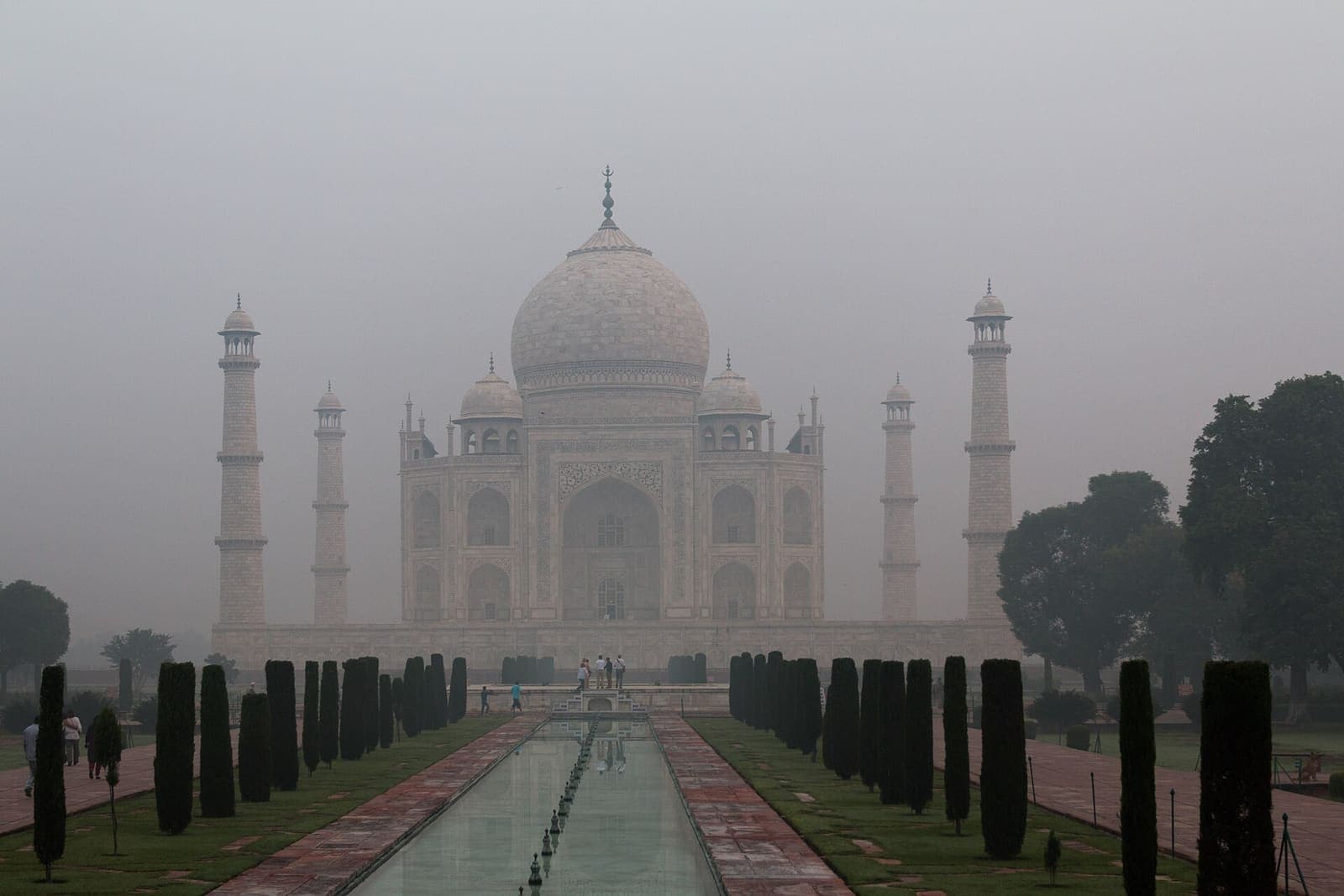
Photo: Daniel VILLAFRUELA · Wikimedia Commons · CC BY-SA 3.0 · resized for web
The best time to visit Agra and the Taj Mahal is October to March, and the best time of day is opening time, 30 minutes before sunrise, when the Taj is at its coolest and quietest. November and February have mild days, little rain and, on long-term averages, less than one foggy day a month. December and January bring cold, often foggy dawns; April to June needs a much slower outdoor plan.
| Your priority | Start with this plan |
|---|---|
| Comfortable general sightseeing | Compare November or February; keep some flexibility for the forecast. |
| The quietest Taj visit | Opening time on a weekday, any month but the hottest. |
| A winter trip already booked | Allow a second daylight opportunity if a clear Taj view is essential. |
| A summer visit | Book the earliest Taj slot and a long indoor break at midday. |
| A monsoon visit | Keep optional outdoor stops movable rather than prepaid back-to-back. |
| Only one full day | Check the Friday closure before buying travel. |
| An evening out | Finish daylight-only monuments before closing, then travel to dinner. |
This is Altitude Rooftop Lounge’s planning guide for visitors to Agra. The seasonal and hourly recommendations are our reading of official climate and visitor information, not a forecast or a promise of empty monuments. Sources were checked on 22 October 2026.
Which months are the best time to visit Agra?
October to March is the best season for visitors, according to both the Agra district administration and the official Taj Mahal site’s FAQ. Within that window, your priorities matter: a comfortable walk, a clear early photograph, a holiday with friends and the lowest room rate are different decisions, and no single month guarantees all four.
Our first comparison would be November against February. Both sit well away from the summer heat and, on IMD averages, have less than one foggy day a month, while December and January deserve extra thought about early-morning visibility. This is a starting point, not a promise that every November or February day will be clear: use it to shortlist dates, then look at the actual forecast and transport.
If your travel dates are fixed, focus on the order of the day rather than worrying that you chose the wrong month. An early outdoor visit followed by a rest is a different experience from walking through the hottest hours, as the hour-by-hour guide below shows. A winter stay with a second daylight window is more flexible than a dawn-only stop between two tight connections.
Choose accommodation and transport together. A slightly different arrival time can give you a full morning without adding another attraction. Our Delhi-to-Agra planning guide explains the route choices; use current timetables for the final booking rather than assuming an old itinerary still matches your train.
Best time of day to visit the Taj Mahal, hour by hour
Go at opening time, 30 minutes before sunrise. The official Taj Mahal FAQ says most visitors prefer sunrise, which beats both the summer heat and the crowds, and that there are usually more visitors at sunset than at sunrise. If you cannot make the dawn, late afternoon is the next best slot. Late morning to mid-afternoon is the busiest part of the day and, from April to June, the hottest.
| Time of day | What to expect |
|---|---|
| An hour before sunrise | Ticket windows open at the East and West Gates. Queues form at security even for online tickets, so this is the time to arrive. |
| Opening, 30 minutes before sunrise, to about 8:00 AM | The quietest and coolest time, with soft pink and gold light on the marble. In December and January, this is also when fog can hide the dome. |
| 8:00 to 11:00 AM | Numbers build as the day-trippers arrive: the morning fast trains from Delhi reach Agra Cantt between 7:40 and 9:50 AM. The light turns whiter, and from April it is already hot. |
| 11:00 AM to 3:00 PM | The busiest stretch, above all at weekends, and from April to June the hottest. Harsh overhead light; the marble glares and warms underfoot. |
| 3:00 PM to closing | The heat eases and the light warms again, but the crowds stay. Ticket windows stop selling 45 minutes before sunset. |
| Closing, 30 minutes before sunset | Everyone is out before the sun goes down. For the sunset itself, go to Mehtab Bagh, across the river. |
| After dark | Only on the night-viewing nights around each full moon, with a separate ticket. |
At opening: the best hour
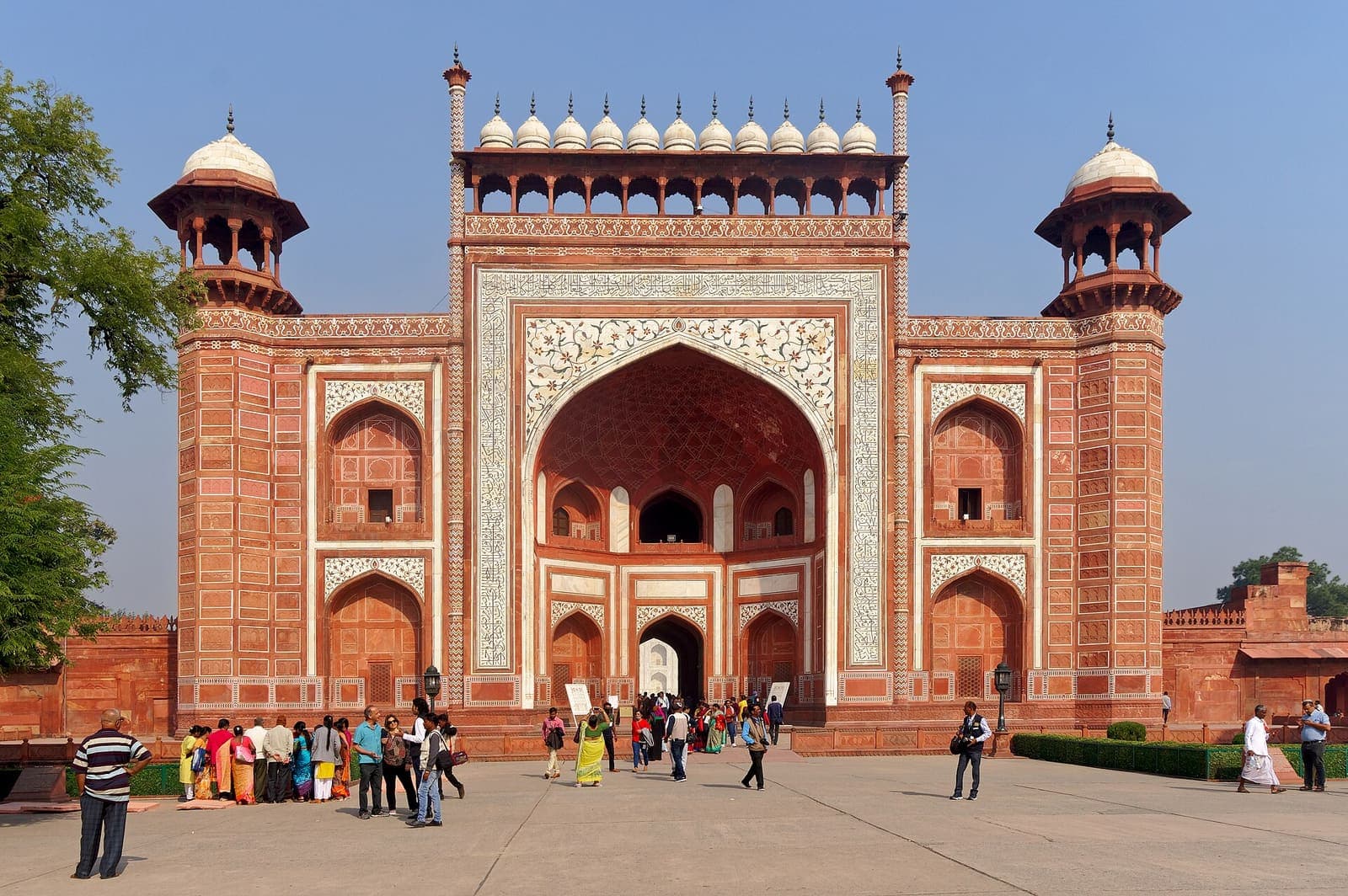
Opening time is the one slot that is good for every reason at once: you are inside before the sun comes up, the day is at its coolest, and the garden is at its emptiest. Be at the gate when the ticket windows open, an hour before sunrise, even with an online ticket, because everyone goes through the same security check. The opening time moves from about 4:53 AM in mid-June to about 6:38 AM in mid-January; our Taj Mahal timings guide has the clock times for every month, and the sunrise guide has where to stand when the light arrives.
Late morning to mid-afternoon: the crowded middle
This is when most day visitors are inside. On the weekend of 15 and 16 November 2025, more than 70,000 people visited the Taj, and Amar Ujala, a Hindi daily, reported waits of about an hour at the ticket windows and turnstiles of both entry gates, with crowds from 11:00 AM to 5:00 PM, worst in the afternoon. If late morning is your only slot, go on a weekday, book online and use the East Gate, which the official site recommends for avoiding the crowd. From April to June, avoid this slot altogether: the average May high is 41.9°C.
Late afternoon: the second-best slot
From about 3:00 PM the heat eases and the light turns warm on the marble, which suits photographs; our Taj Mahal photography guide has the spots. Expect company, since the official site says sunset draws more visitors than sunrise. The ticket windows stop selling 45 minutes before sunset and the gates close 30 minutes before it, so arrive at least two hours before sunset to have time inside. You cannot watch the sun go down from the garden; Mehtab Bagh, directly across the Yamuna, stays open until sunset every day, Fridays included.
When the hour matters most
In the extremes of the year. From April to June, go at opening time or not before late afternoon. In December and January, a foggy morning can hide the dome entirely, so keep the visit flexible: the Taj stays open until 30 minutes before sunset, and a later slot or the next morning may be clear. From October to March any slot works, and opening time is still the quietest.
What does Agra’s month-by-month weather data show?
The IMD Agra Taj table uses the 1991–2020 climate period. These are long-term monthly averages, not the temperature or rainfall promised for your trip. Read the figures as context for packing and pacing, then check short-range conditions near departure.
| Month | Temperature °C; rainfall; fog |
|---|---|
| January | 7.4 / 22.2; 12.5 mm; 5.4 foggy days |
| February | 10.4 / 26.2; 10.8 mm; 0.5 foggy days |
| March | 14.2 / 32.1; 8.3 mm; 0.2 foggy days |
| April | 20.0 / 38.4; 8.5 mm |
| May | 24.4 / 41.9; 21.4 mm |
| June | 25.5 / 41.1; 46.4 mm |
| July | 24.7 / 36.0; 245.8 mm |
| August | 23.9 / 33.1; 198.6 mm |
| September | 23.5 / 34.2; 110.8 mm |
| October | 18.7 / 34.7; 24.7 mm |
| November | 13.2 / 29.2; 2.5 mm; 0.6 foggy days |
| December | 8.1 / 23.7; 3.2 mm; 4.5 foggy days |
The planning lesson is that a label such as “winter season” hides real differences. Do not pack for a single pleasant afternoon if your plan starts before daylight, and do not assume a cool morning means you can walk without a break for the rest of the day. Think in morning, midday and evening blocks.
Monthly rainfall is also different from a forecast of how many hours your sightseeing will be interrupted. Keep a replaceable activity for an unsettled day, and avoid making every outdoor stop depend on the previous one finishing at an exact minute. A flexible itinerary usually needs fewer last-minute transport changes.
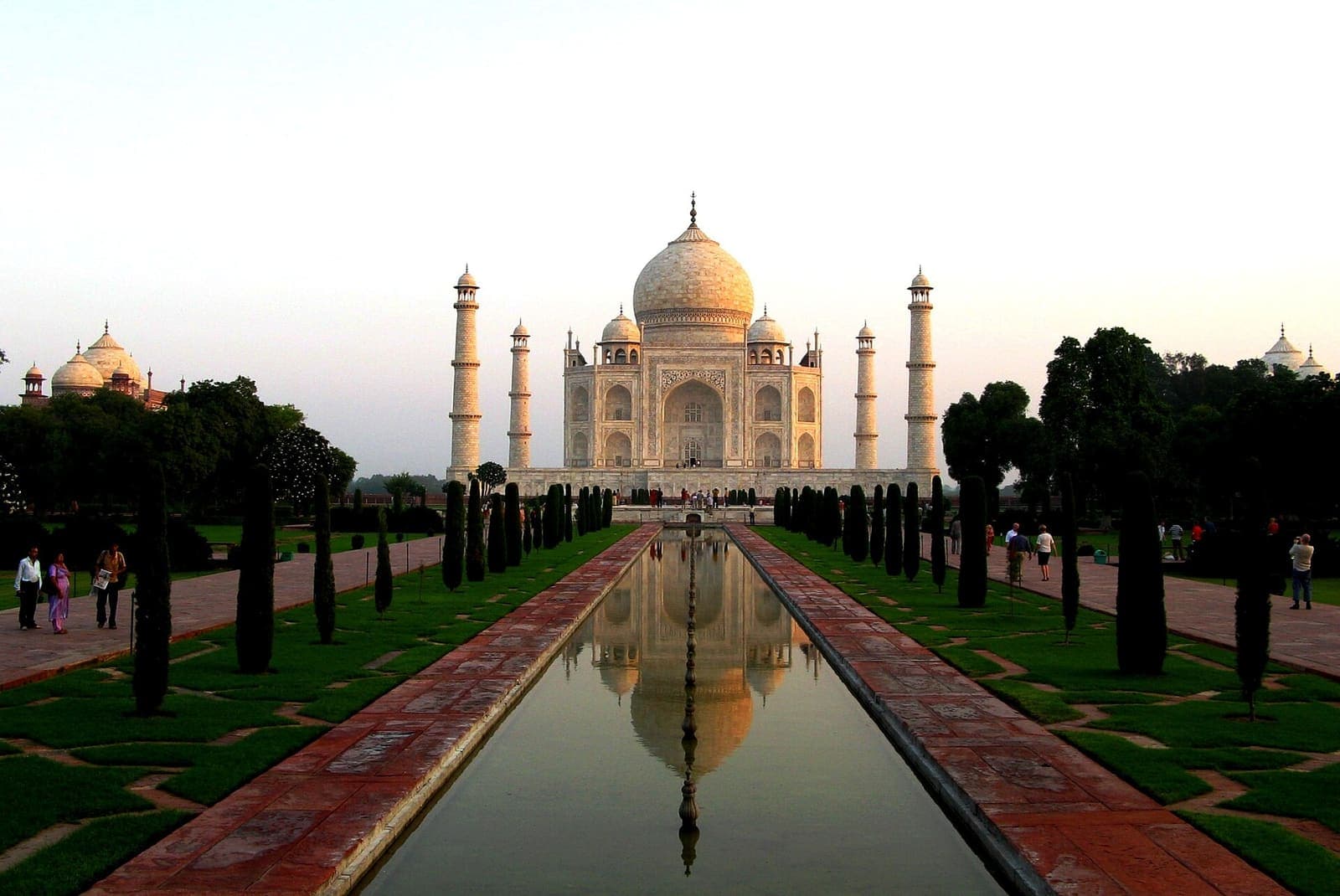
Photo: Arup1981 · Wikimedia Commons · CC BY-SA 4.0 · resized for web
Should I avoid December and January because of fog?
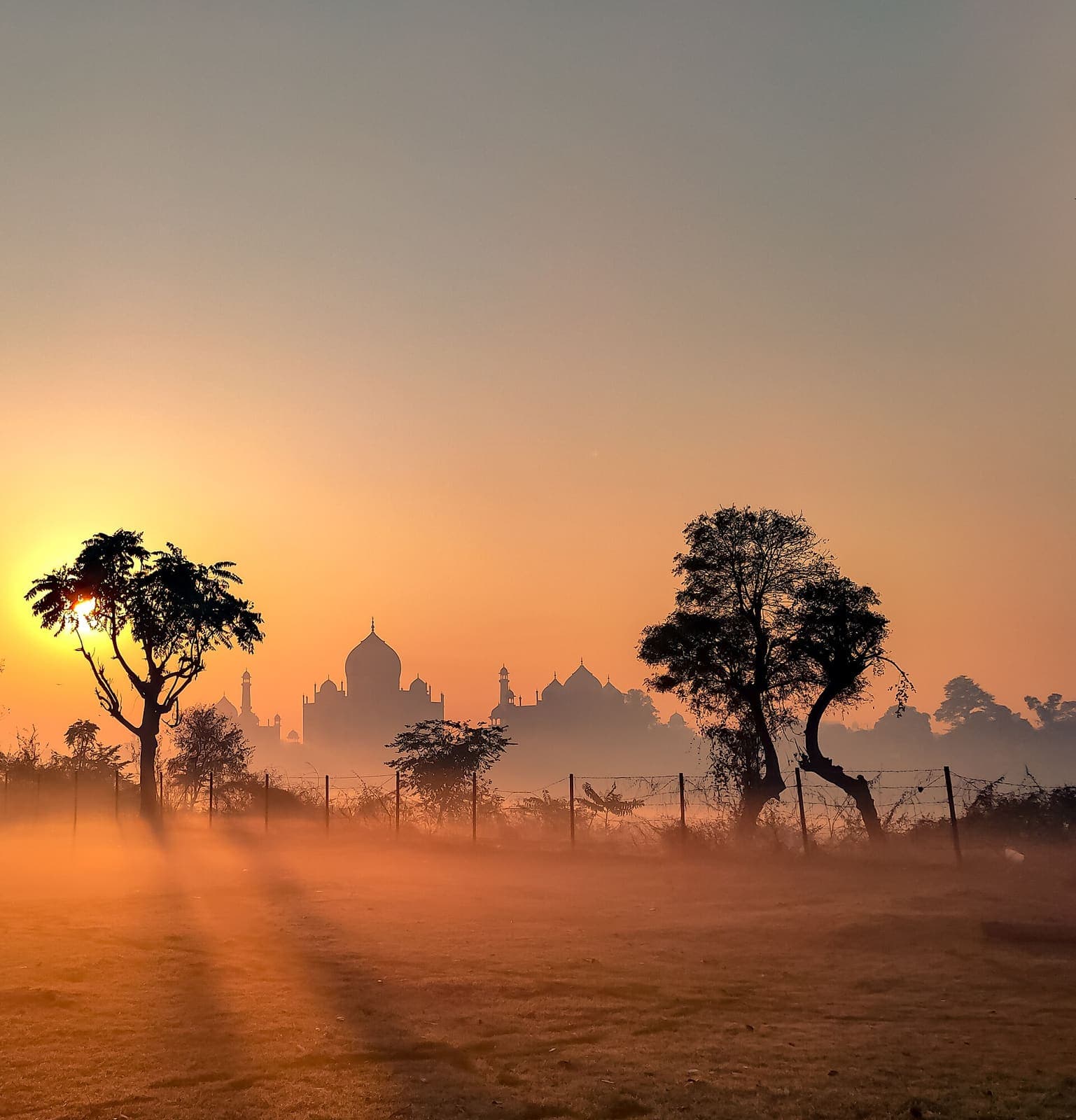
You do not need to rule out a winter trip, but treat a clear dawn view as uncertain. The IMD table records 5.4 foggy days in January and 4.5 in December, against 0.6 in November and 0.5 in February. That supports building in flexibility; it cannot tell you which morning will be white.
If seeing the Taj Mahal clearly is the main purpose of the trip, consider two nights, or at least a second daylight opportunity. A one-night stay with a single early slot gives you fewer options. Before paying for a second visit, check the ticket conditions: a day ticket is for one date and is not a pass for repeated entry.
Warm layers help when you are waiting rather than walking. Plan breakfast and a proper rest after the visit, and decide on the next attraction according to how the group feels. If you are photographing details, the experience does not have to depend on one distant view of the building.
Travel connections deserve their own margin. Check the running information for your train and conditions on the road instead of treating a published journey time as a guarantee. Avoid an itinerary where a slightly delayed arrival leaves only minutes to reach the monument or catch the next departure.
How should I plan Agra in April, May or June?
Make the outdoor part of the day shorter and earlier, and plan a real break. On IMD averages, the daily high is 38.4°C in April, 41.9°C in May and 41.1°C in June, so a summer itinerary should not copy a winter route with the same number of monuments. The question is how to enjoy the stops you care about while keeping enough energy for the rest of the trip.
Choose one main morning visit, ideally the Taj at opening time, then leave space for breakfast or lunch and an indoor rest. If you add another attraction, decide after checking the forecast and the needs of the slowest person in your group. A car transfer does not remove the walking and waiting inside a monument.
Wear familiar shoes and practical clothing, and make a water plan that fits the site’s entry rules. The Taj Mahal clothing and packing guide separates official restrictions from comfort advice. Visitors with particular medical needs should follow their own clinician’s guidance about travel and heat rather than relying on a general sightseeing article.
Do not assume fewer visitors or cheaper rooms simply because it is summer. Compare actual availability, cancellation conditions and the full cost of transport and indoor breaks for your dates. A low headline room price is not automatically a better-value trip if the itinerary becomes uncomfortable or leaves you exhausted.
Is a monsoon visit still worthwhile?
It can be, if you are comfortable changing the order of outdoor activities. July to September brings most of Agra’s rain, with about ten rainy days in each of July and August on IMD averages, so check the forecast rather than deciding from a dramatic photograph online. No article can promise a dry sunset or a particular reflection on your dates.
Keep document protection and footwear simple. Plan where you can pause if conditions change, and agree the return pickup with your driver before entering a monument rather than relying on an improvised roadside wait. If the weather disrupts a stop, a meal and a slower day can be a better choice than squeezing everything in.
Book optional activities with the cancellation terms in mind. A prepaid sequence of tightly timed outdoor stops leaves little room to adapt, whereas one fixed booking and one flexible stop is easier to manage. Check whether a change means a refund, a credit or a new payment before assuming the weather is covered.
For the riverside garden, consult the official Mehtab Bagh visitor information. It is open from sunrise to sunset every day, so it is a daylight visit, not somewhere to wait for the sky to clear after closing. Plan a return route that works even if you leave before the photograph you hoped for.
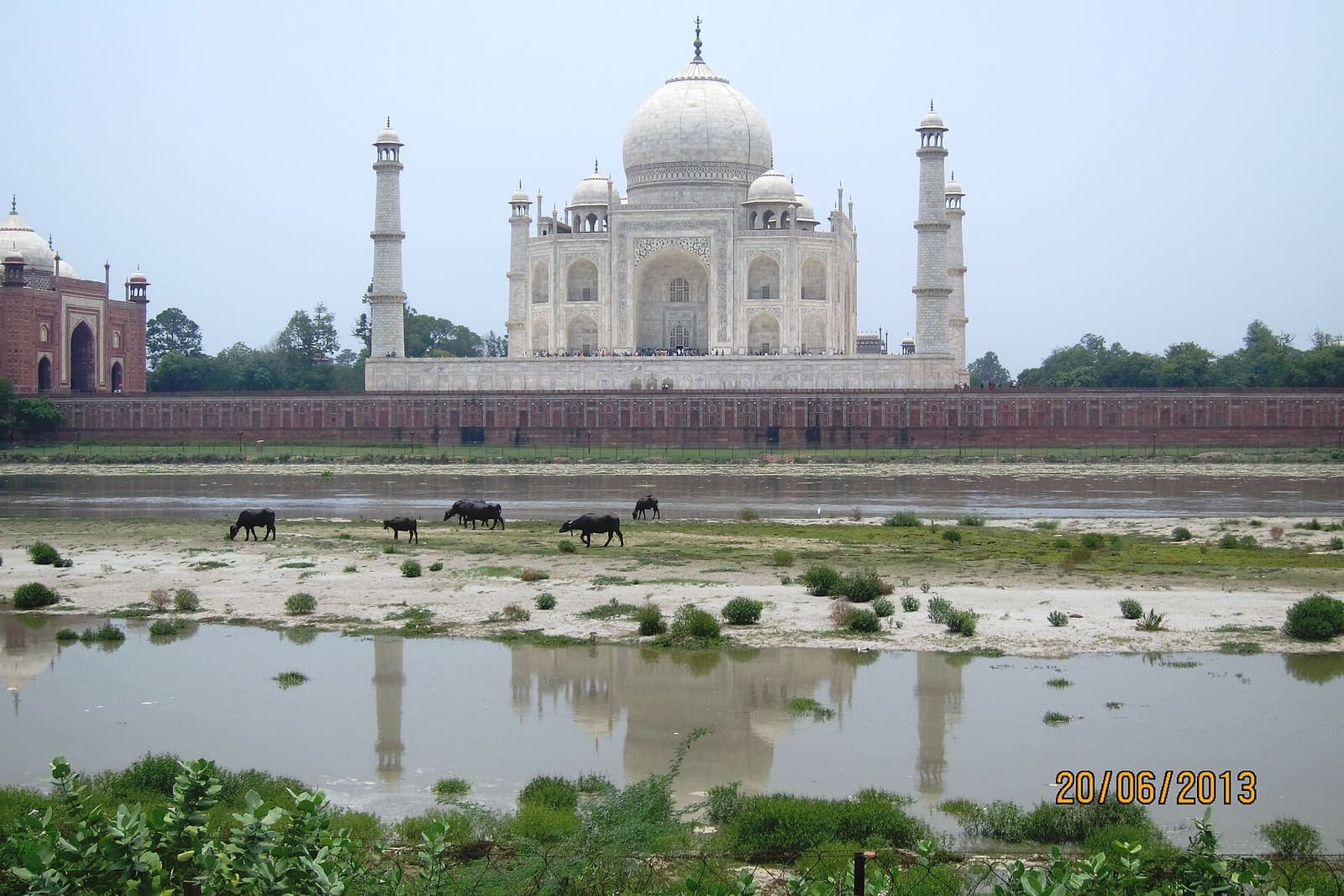
Photo: Prakash1972 2000 · Wikimedia Commons · CC BY-SA 3.0 · resized for web
Does the day of the week matter as much as the month?
For the Taj Mahal, getting the day right is essential: it is closed to visitors every Friday. The official visiting-hours page also uses a sunrise-and-sunset rule rather than one fixed opening time through the year, so build your visit around the date you actually have.
If a Friday falls within your stay, put the Taj on another day and use the Friday for other sights. Agra Fort’s official listing says it is open all seven days, from sunrise to sunset. Check current notices for individual attractions before treating that as a promise that every part of every site will be open.
Weekends are busier than weekdays: the November 2025 weekend described in the hour-by-hour guide above brought more than 70,000 visitors in two days. Indian public holidays and long weekends bring the same pressure, so compare your dates with the holiday calendar and with available bookings. On any day of the week, opening time is your best chance of staying ahead of the queues.
Early entry still does not guarantee an empty landmark or perfect visibility. Decide whether your priority is a quiet start, photography, sleep after a long journey or keeping a family comfortable, and leave enough time for security either way.
Is one night enough, or should I stay two?
One night can cover a focused trip; two nights give you more room for weather, a slower pace and another part of Agra. Decide by listing your essential experiences first. If that list holds the Taj, Agra Fort, a riverside garden, markets and a relaxed evening, squeezing it around two long transfers may spoil the enjoyment.
For one night, arrive with enough time to settle in, choose a simple evening and make the Taj the next morning’s anchor on any day but Friday. Add a second major stop only when the return journey allows it. Keep the station name and departure time visible in the plan; Agra’s railway stations are not interchangeable.
For two nights, separate the main monuments and keep one flexible afternoon. Pair nearby stops where practical, but check the road route rather than assuming places across the river are a short walk apart. Our places-to-visit guide gives the wider sightseeing choices without requiring you to visit them all.
Protect your final connection. A relaxed dinner is worthwhile only when you have time to reach the correct departure point afterwards. If the schedule is tight, eat closer to your next stop and save the extra outing for another visit. Choosing one thing fewer is often the most useful change to an overfilled plan.
How do I fit a useful evening into the season?
Finish any daylight-only monument first, then choose dinner around your accommodation and return route. Sunset sightseeing and night viewing are different activities with different access rules. Do not assume that the name “Moonlight Garden” grants night entry, or that Taj night viewing runs every evening.
Altitude Rooftop Lounge publishes this guide and is on the top floor above MG Road 2, Jaipur House, about 6.5 km and 25 minutes by road from the Taj, with a view over the city rather than the Taj Mahal. It is open every day from 1:00 PM to 11:30 PM. If a rooftop meal fits your route, check the menu, the forecast and seating before setting out, and treat the transfer as a real part of the plan.
On a foreign passport, all drinks there are buy one, get one free from 1:00 PM to 7:00 PM, dine-in only, under the current terms. A separate restropub option is Cheers & Beers; its own site is the place to confirm opening, 21+ admission and entry details.
Before departure, confirm the forecast, monument opening, ticket category, accommodation cancellation terms and onward transport. Then keep one optional stop genuinely optional. A good season improves the starting conditions; a workable plan is what gives you time to enjoy the city when the actual day is warmer, wetter or slower than expected.