Agra to Fatehpur Sikri: a practical guide to the day trip
Akbar’s red sandstone capital sits an hour up the Jaipur road, and it is the trip out of Agra we would put first. Here is how to do it in a morning — getting there, the tickets, the order to walk it in, the touts — and be back in the city for the evening.
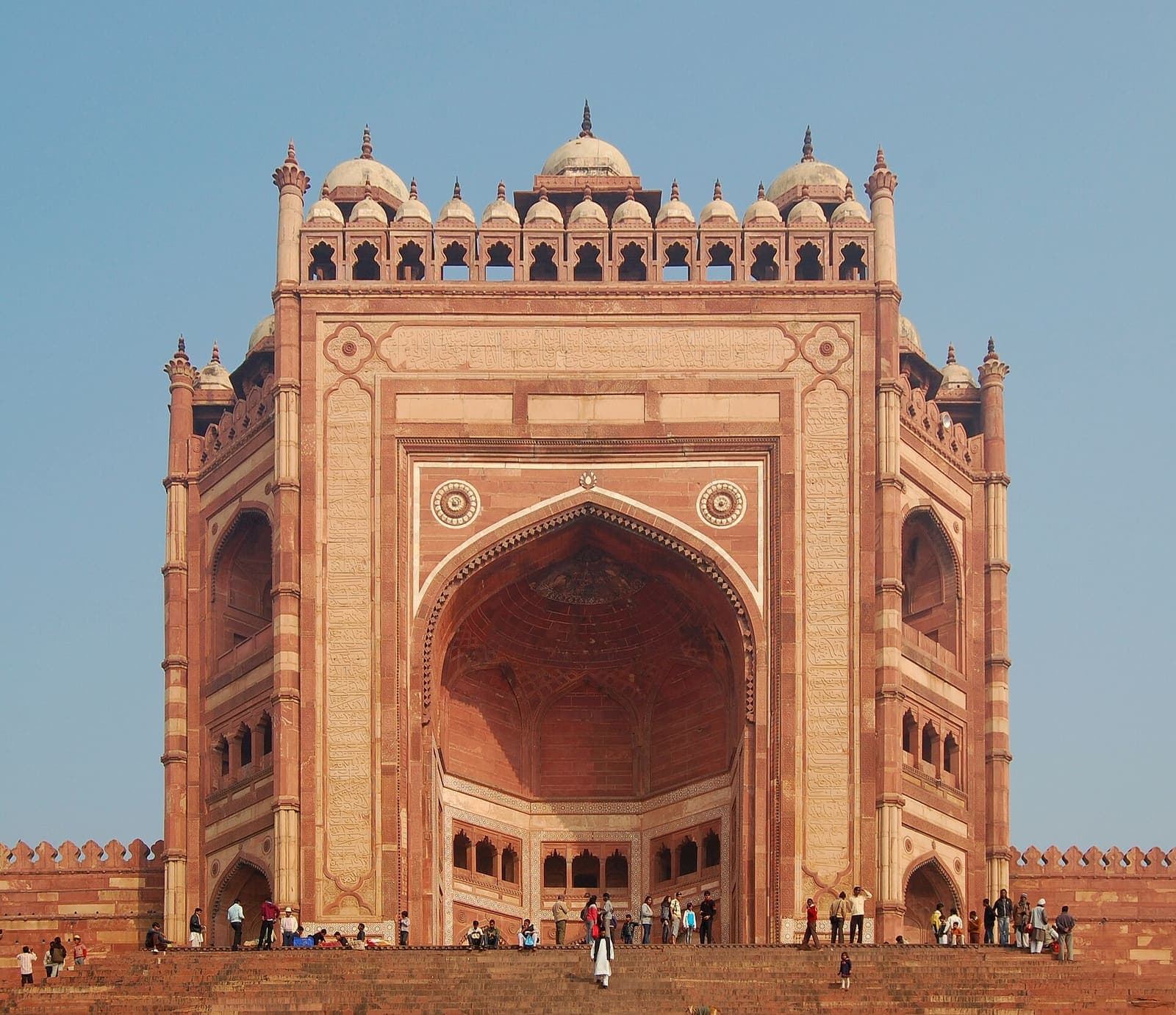
Photo: Marcin Białek · Wikimedia Commons · CC BY-SA 3.0
Fatehpur Sikri is about 37 to 40 km west of Agra on the Jaipur road, roughly an hour each way by car, and it fits into a morning: leave at seven, give it three to four hours, and you are back in Agra for a late lunch. The palace complex is ticketed — ₹50 for Indian visitors and ₹610 for foreign visitors — while the Jama Masjid, the Buland Darwaza and Salim Chishti’s tomb beside it are free. It is open from sunrise to sunset every day, Fridays included.
Akbar began building it in 1571, and it took the name Fatehpur, the City of Victory, after his Gujarat campaign of 1573. The court left in 1585 — failing water is the usual explanation — and the palaces have stood empty for four centuries. It has been a UNESCO World Heritage Site since 1986, and if you have one spare morning in Agra, this is where we would send you.
Getting there: taxi, bus or train
By taxi or hired car
This is the easy way, and the one we would choose: about an hour along the Jaipur road, NH-21. Agree a fixed price for the round trip before you get in, with waiting time, tolls and parking included, and have it on WhatsApp so nobody remembers it differently at noon. For scale, one online cab site was quoting about ₹1,550 to ₹1,900 one way for a hatchback or sedan in October 2026.
Cars stop at a car park a kilometre or so short of the monument. A shuttle bus or electric cart runs from there to the Diwan-i-Am, where the ticket office is, for about ₹25 a head.
By bus from Idgah
UPSRTC buses for Fatehpur Sikri leave regularly from Agra’s Idgah bus stand and the ISBT. It is the cheapest way and the slowest: the bus stops along the road, can be crowded, and drops you in the town, an auto ride from the gates. Fine in February; hard work in May.
By train
Fatehpur Sikri has a small station about a kilometre from the town, but few trains stop there at useful hours. When we checked in October 2026, the ones that suit a day trip left Agra Fort station at about 6:15 and 6:45 AM and came back in the late afternoon, about an hour out and an hour and a half back. Check NTES or the IRCTC app the evening before, and have a road plan in case the train back runs late.
Tickets, timings and what is free
The gates open at about sunrise and close at sunset, every day. That means closing at about 5:30 PM in December and January and nearer 7:00 PM in June. Do not arrive in the last hour: the ticket windows shut a little before the gates do.
| Who | Price |
|---|---|
| Indian citizens | ₹50, or ₹40 on a Friday |
| SAARC and BIMSTEC citizens | ₹50, or ₹40 on a Friday |
| Foreign visitors | ₹610, or ₹600 on a Friday |
| Children under 15 | Free |
| Jama Masjid, Buland Darwaza, Salim Chishti’s tomb | Free, no ticket |
Fridays are ₹10 cheaper because the Agra Development Authority does not collect its toll that day, and buying online takes a further ₹5 off an Indian ticket and ₹50 off a foreign one. These are the Archaeological Survey of India’s published rates and they do change, so check the ASI Agra Circle’s fee table before you go.
The Taj Mahal is closed on Fridays and Fatehpur Sikri is not, which makes this the natural Friday plan — Agra on a Friday has the rest of the day. The Jama Masjid is a working mosque, though, so on a Friday be through it before the midday prayers.
What to see, in the order that works
The shuttle drops you at the Diwan-i-Am, at the palace end, so start there and finish at the mosque. Allow an hour and a half to two hours for the palace and about an hour for the mosque side.
The palace complex (ticketed)
- Diwan-i-Am. The hall of public audience, a big courtyard ringed by colonnades where the emperor appeared before his subjects. Everything after it gets more private.
- Diwan-i-Khas. A plain square building with four chhatris on the roof. Inside, a single carved pillar opens into 36 serpentine brackets supporting a platform at the top. Stand under it before you read anything about it.
- Panch Mahal and Anup Talao. Five open storeys on 176 columns, each smaller than the one below, built for the women of the court. Close by, the Anup Talao is an ornamental pool with a central platform and four bridges out to it.
- Jodha Bai’s palace. The largest of the residential buildings, set around a courtyard and full of Rajput detail. It was the home of Akbar’s Rajput wife Mariam-uz-Zamani, commonly called Jodha Bai.
- Birbal’s house. A short way off, and worth ten minutes for its sloping stone sunshades and the brackets that carry them.
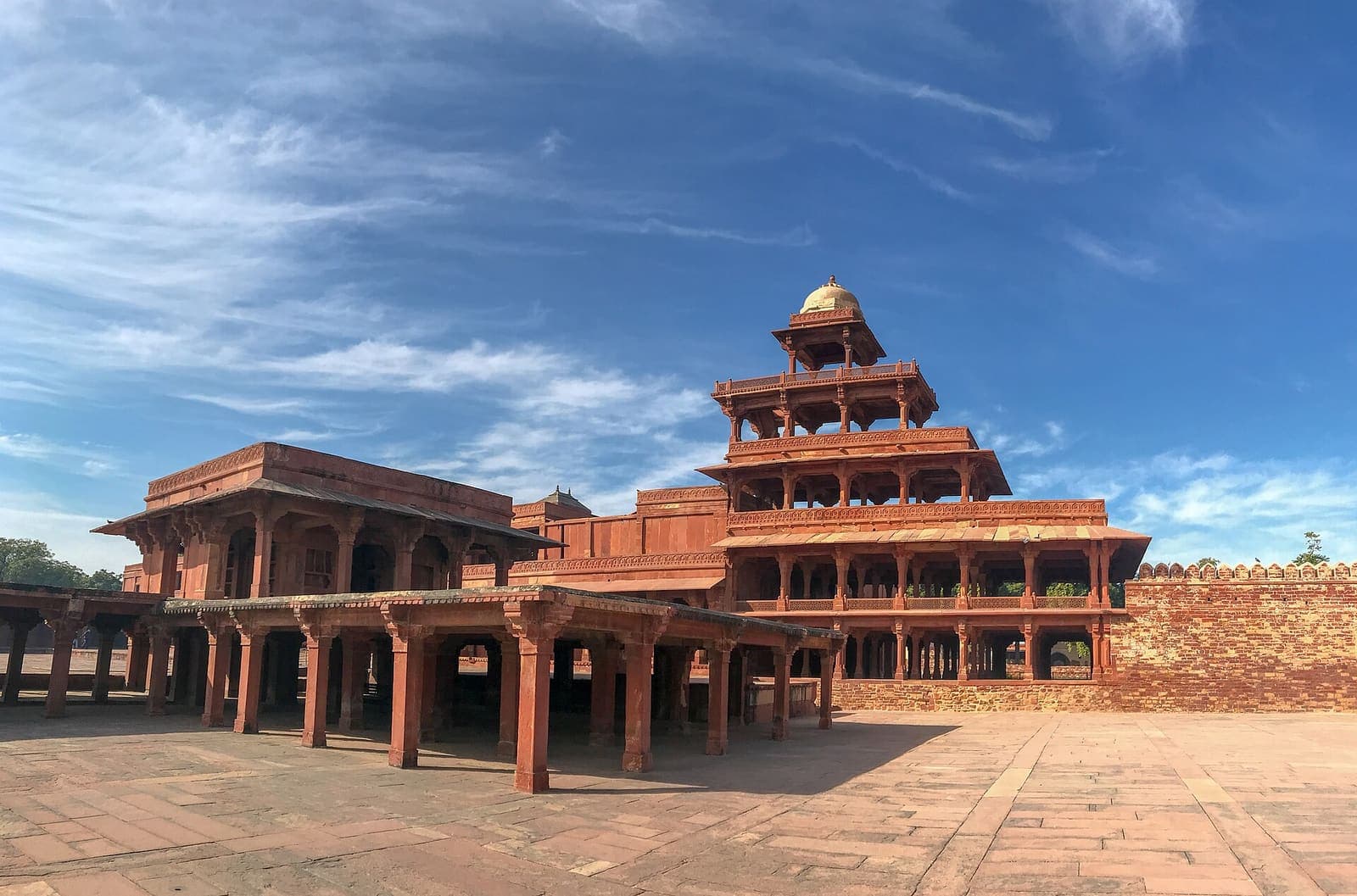
Photo: FLASHPACKER TRAVELGUIDE · Wikimedia Commons · CC BY-SA 2.0
The mosque side (free)
From the palace it is a short walk to the Jama Masjid, completed in 1571–72 and one of the largest mosques in India. In its courtyard is the white marble tomb of Salim Chishti, the Sufi saint who foretold the birth of Akbar’s son; the prince was named Salim after him and became the emperor Jahangir.
The tomb, finished in 1580–81, is all carved marble screens. People come here to pray, not only to look, so go in quietly and save the photographs for the courtyard.
Then cross the courtyard to the Buland Darwaza and stand at the top of its steps. The gate is about 40 metres high on its own and about 54 metres from the ground with its 42 steps, built to mark the Gujarat campaign and added after the mosque was finished. Its inscription is worth the stop: the world is a bridge, it says, pass over it, but build no houses upon it.
Guides, touts and the mosque
You will be approached near the entrance and again around the mosque — by would-be guides, by souvenir sellers, and inside the courtyard by people steering you towards offerings for the tomb. None of it is compulsory, and a smile and a clear “no, thank you” works.
A guide is worth having in the palace, where the buildings mean more with the stories attached. Hire a licensed one near the ticket office, ask to see the licence, and agree the fee and the duration first. A guide who suggests a quick stop at a shop is selling the shop.
At the Jama Masjid
- Shoes come off at the gate. If someone minds them, agree the amount first and remember which gate you used.
- Cover shoulders and knees, and carry a scarf or a cap for the tomb.
- From April to June the stone is hot enough by late morning to hurt bare feet. Socks help.
- It is a working mosque: keep your voice down and step round anyone at prayer.
When to go: the season and the hour
October to March is the season: mild rather than hot, with the red sandstone at its best in the low winter sun. In late December and January, morning fog can sit on the highway, so leave a little later and let the driver take it slowly.
April to June is a different trip. Agra’s afternoons run well past 40°C and a sandstone courtyard hands the heat straight back, so be at the gates when they open and gone by eleven. In the monsoon the light is clean after rain, but the stone is slippery and the humidity hard going.
Within the day, early beats late: the first two hours are the coolest and the quietest. Late afternoon has the best light, but in winter the gates shut at about 5:30 PM, which leaves less time than it seems.
A sample day
| Time | Plan |
|---|---|
| 7:00 AM | Leave Agra after an early chai. From April to June, leave at 6:00 AM. |
| 8:00 AM | Car park, shuttle to the Diwan-i-Am, tickets. |
| 8:15 AM | Diwan-i-Am, Diwan-i-Khas, Panch Mahal and Anup Talao. |
| 9:30 AM | Jodha Bai’s palace and Birbal’s house. |
| 10:15 AM | Walk to the Jama Masjid: Salim Chishti’s tomb, then the Buland Darwaza. |
| 11:15 AM | Back to your shoes, the shuttle and the car. |
| 12:30 PM | Back in Agra. Lunch, and an afternoon out of the sun. |
| 5:00 PM | Up to a rooftop for sunset; at ours, mocktails are 30% off until 7:00 PM. |
| 7:30 PM | Dinner. |
Rather sleep in? Leave Agra at about 1:30 PM and you have three good hours before the light goes in October or February, rather less in December. You lose the cool, but you are still back for dinner.
Adding Bharatpur, or going on to Jaipur
Keoladeo National Park, the old Bharatpur bird sanctuary, is roughly 20 km further along the same road, just over the border in Rajasthan. It is a World Heritage Site in its own right and a winter home for huge numbers of migratory water birds; December and January, when the cranes are in, are the months to go. Outside the winter, we would skip it.
Both in one day is possible, and long: Fatehpur Sikri first thing, the park in the afternoon, and back after dark, since Bharatpur is about 56 km from Agra. The park has its own ticket. If you are in a taxi, say so at the start, because crossing into Rajasthan changes the quote.
Fatehpur Sikri is also on the way to Jaipur. If you are leaving Agra for Rajasthan anyway, stop on the way: it costs three or four hours rather than a day. Get the stop written into the taxi quote.
Back in Agra for the evening
This is Altitude’s journal, and the evening is where we come in. After the morning version, the afternoon is yours for the rest of Agra or a sleep, and from October to March the light goes between about 5:30 and 6:30 PM. For after that, there is what to do in Agra after dark and our guide to seeing the Taj at night.
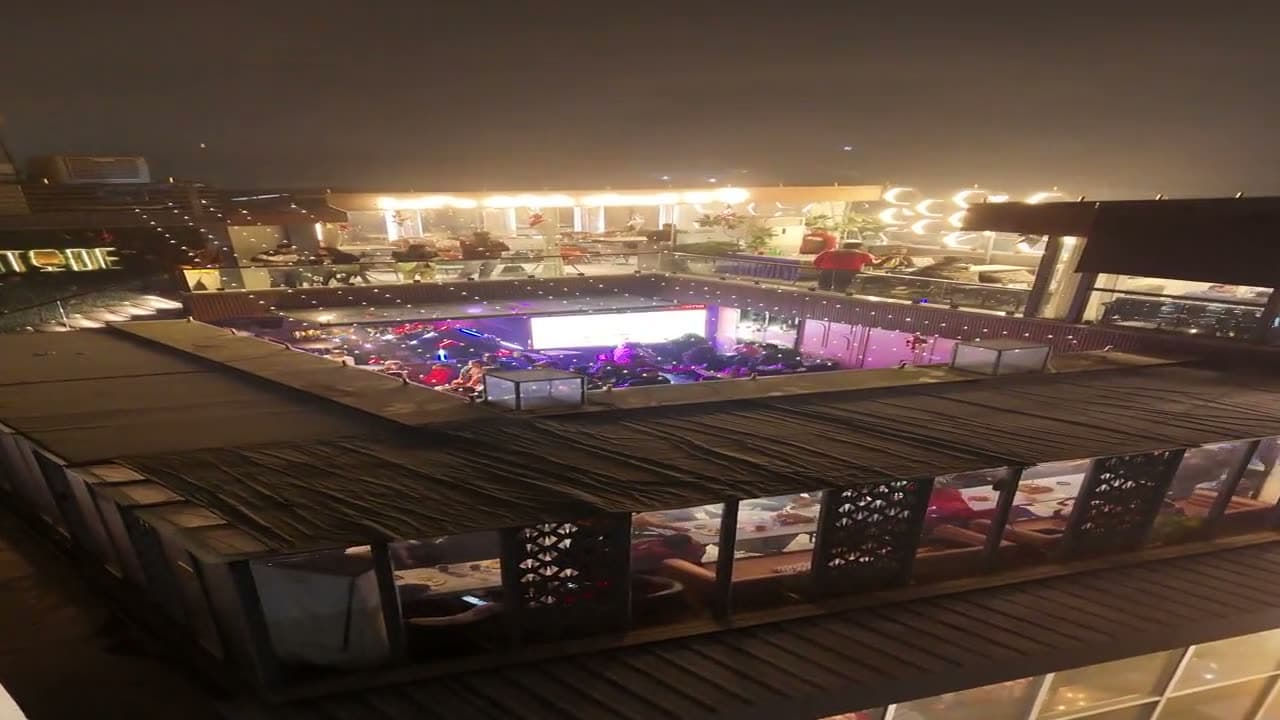
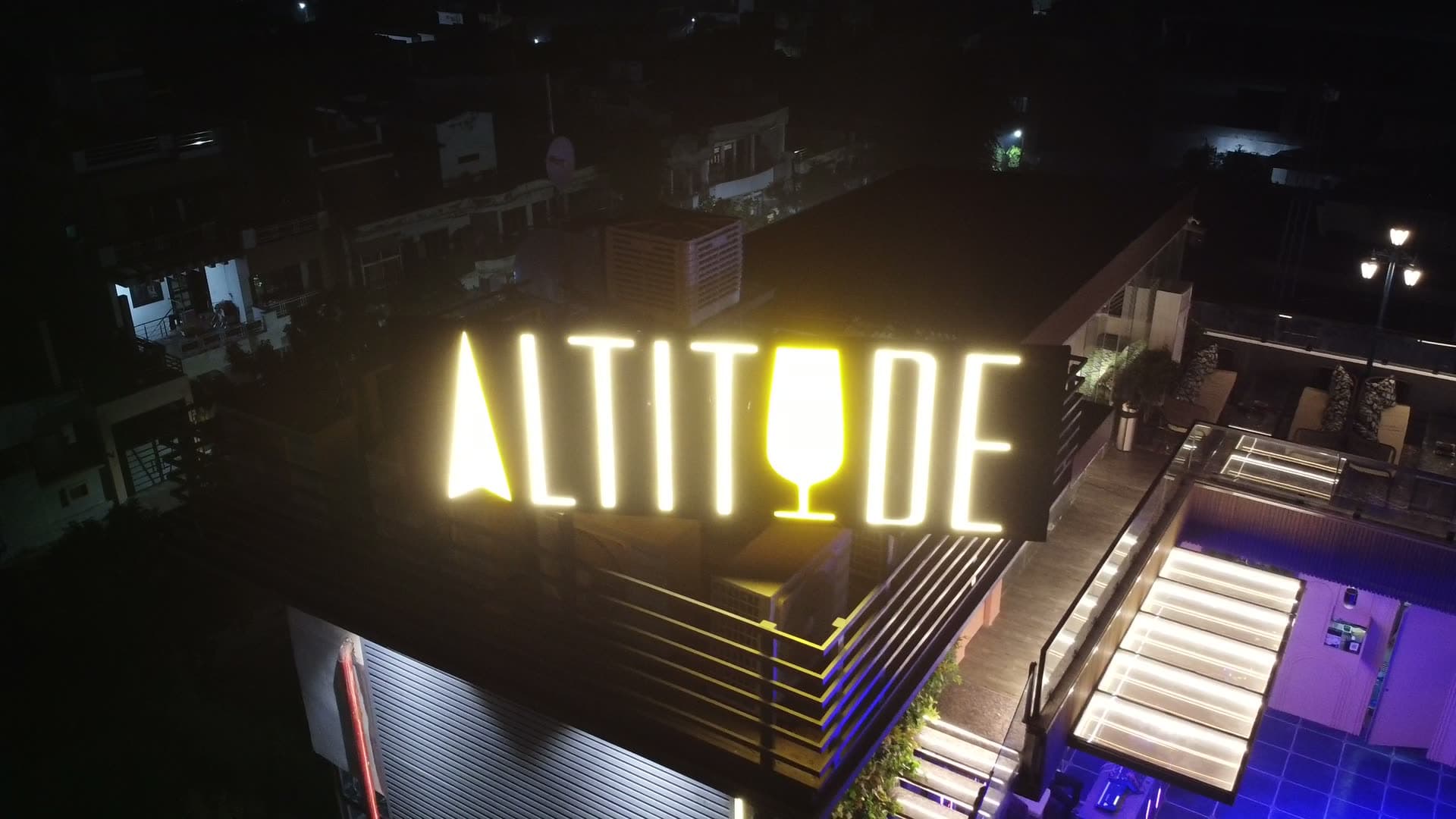
Photo: Altitude Rooftop Lounge · Altitude
Or come up to the roof. Altitude is on the top floor above MG Road 2 in Shahganj, open every day from 1:00 PM to 11:30 PM, with the kitchen up there too: a tandoor, a wok, a pizza oven and 225 dishes from ₹20 to ₹830. We do not serve alcohol; the cold list is mojitos, mocktails, iced teas, shakes and coffee, and every mocktail is 30% off from 5 to 7 PM. There is no Taj view from our roof — just the city, the sky and a chair after a morning on your feet.
Book a table online: free, confirmed instantly, and free to cancel up to two hours before. A weekday table booked for 1:00 to 6:00 PM gets 30% off what you order before six, any other weekday booking 20%, and any day 15%; one offer per bill, and none on 31 December, 1 January, major festivals or public holidays — the offers page has the terms. Too tired to go out again? Order from the same kitchen to your hotel.