Agra Metro for visitors: open stations, fares and the Taj gates
Agra’s first metro line is short, but it runs exactly where a visitor goes: past both Taj gates to Agra Fort and the old city. Here is what is open, what it costs, which station to use for each sight, and when a taxi is still the better choice.
By Priyanka Singh, Travel expert
 (opens in a new tab)
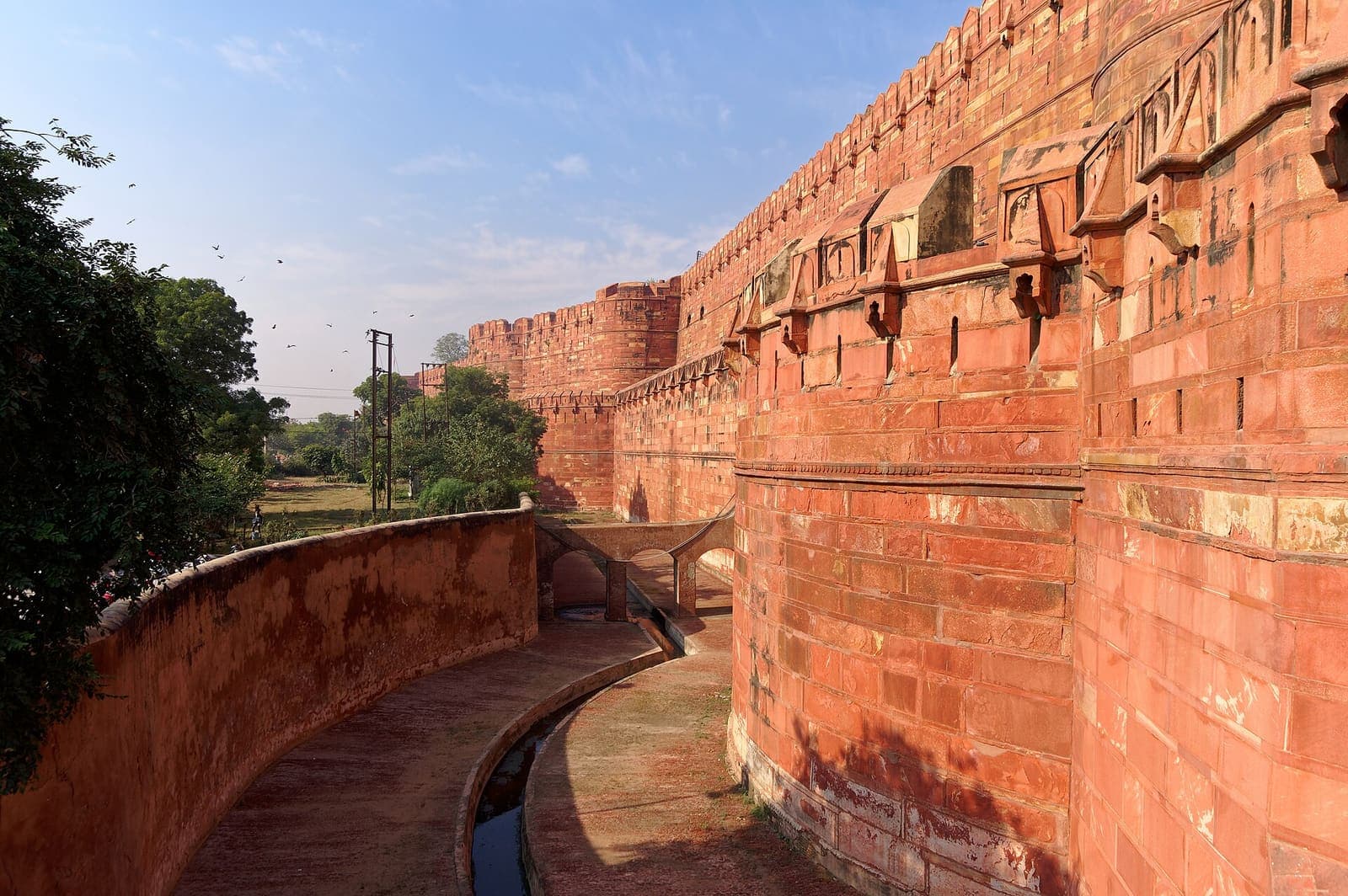
Photo: Jakub Hałun · Wikimedia Commons · CC BY-SA 4.0 · resized for web
When we checked on 22 October 2026, Agra Metro was running on one line of six stations, about 6 km from Taj East Gate to Mankameshwar, with a station for each Taj entrance and one for Agra Fort. Fares are ₹10 to ₹20, and trains run from about 6:00 AM to 10:00 PM. Five more stations, out to the ISBT bus terminal, had passed their safety inspection and were waiting for an opening date.
| Question | Answer |
|---|---|
| What is open | Six stations, about 6 km, Taj East Gate to Mankameshwar, since March 2024 |
| Next to open | SN Medical College, Agra College, Raja Ki Mandi, RBS College and ISBT; date awaited |
| Fares | ₹10 for one station, ₹15 for two, ₹20 for three to six |
| Hours | About 6:00 AM to 10:00 PM, every day |
| For the Taj East Gate | Taj East Gate station |
| For the Taj West Gate | Taj Mahal station |
| For Agra Fort | Dr. Ambedkar Chowk station |
| For Agra Fort railway station and Jama Masjid | Mankameshwar station |
| Not on the metro yet | Agra Cantt station, Sikandra, Baby Taj, Mehtab Bagh |
Which Agra Metro stations are open?
The first six stations of the Yellow Line, opened in March 2024: Taj East Gate, Shaheed Captain Shubham Gupta, Fatehabad Road, Taj Mahal, Dr. Ambedkar Chowk and Mankameshwar. Dr. Ambedkar Chowk was called Agra Fort station when it opened, and older maps still use that name. The operator’s Agra Metro website and route map show the live network, and UP Tourism hosts the operator’s visitor leaflet with the stations and the places near each.
| Station | Near it |
|---|---|
| Taj East Gate | The Taj Mahal’s East Gate, Taj Nature Walk and the I Love Agra selfie point |
| Shaheed Captain Shubham Gupta | Taj Nagari Phase 2 and its park |
| Fatehabad Road | Mall Road, Sadar Bazar and BD Jain College |
| Taj Mahal | The Taj Mahal’s West Gate side, Taj Ganj and Shahjahan Garden |
| Dr. Ambedkar Chowk | Agra Fort, Ramlila Ground and Baluganj |
| Mankameshwar | Agra Fort railway station, Jama Masjid, Kinari Bazar and Subhash Bazaar |
The line continues underground from Mankameshwar to SN Medical College, Agra College, Raja Ki Mandi and RBS College, then rises to the ISBT bus terminal. Those five stations were inspected by the railway safety commissioner in October, and a launch planned for 10 October was put back to after Dussehra, as Amar Ujala reported on 9 October. On 14 October the opening date was still awaited. If they have opened by the time you travel, the line runs on to ISBT; Guru Ka Taal and Sikandra, at the far end, are targeted for December 2026.
For visitors, the extension matters at both ends. Raja Ki Mandi station connects with the railway station of the same name, and ISBT is the inter-state bus terminal, which the official Taj Mahal site lists for buses to Delhi, Jaipur and Mathura. Once the line reaches its last two stations, it will serve the Guru Ka Taal gurdwara and Akbar’s tomb at Sikandra, both a taxi ride from the Taj today.
A second line, from Agra Cantt station across the city to Kalindi Vihar, is still being built. Old articles that show the full network as if it were running are describing the plan, not the service.
Which metro station should you use for the Taj Mahal?
Choose your Taj gate first. The operator’s leaflet lists Taj East Gate station for the East Gate and Taj Nature Walk, and Taj Mahal station for the West Gate side, Taj Ganj and Shahjahan Garden. Neither station is at a gate: no petrol or diesel vehicles are allowed within 500 metres of the Taj, so allow for a walk at the end. Our Taj Mahal gates guide explains which gate suits you.
For sunrise, check the clock. The Taj opens 30 minutes before sunrise, which is about 6:10 AM in late November and about 6:40 AM in mid-January, and the first trains run from about 6:00 AM. That works only if you are staying a short walk from a station; otherwise book a taxi for the morning and use the metro later. Our Taj Mahal timings guide has the opening time for each date.
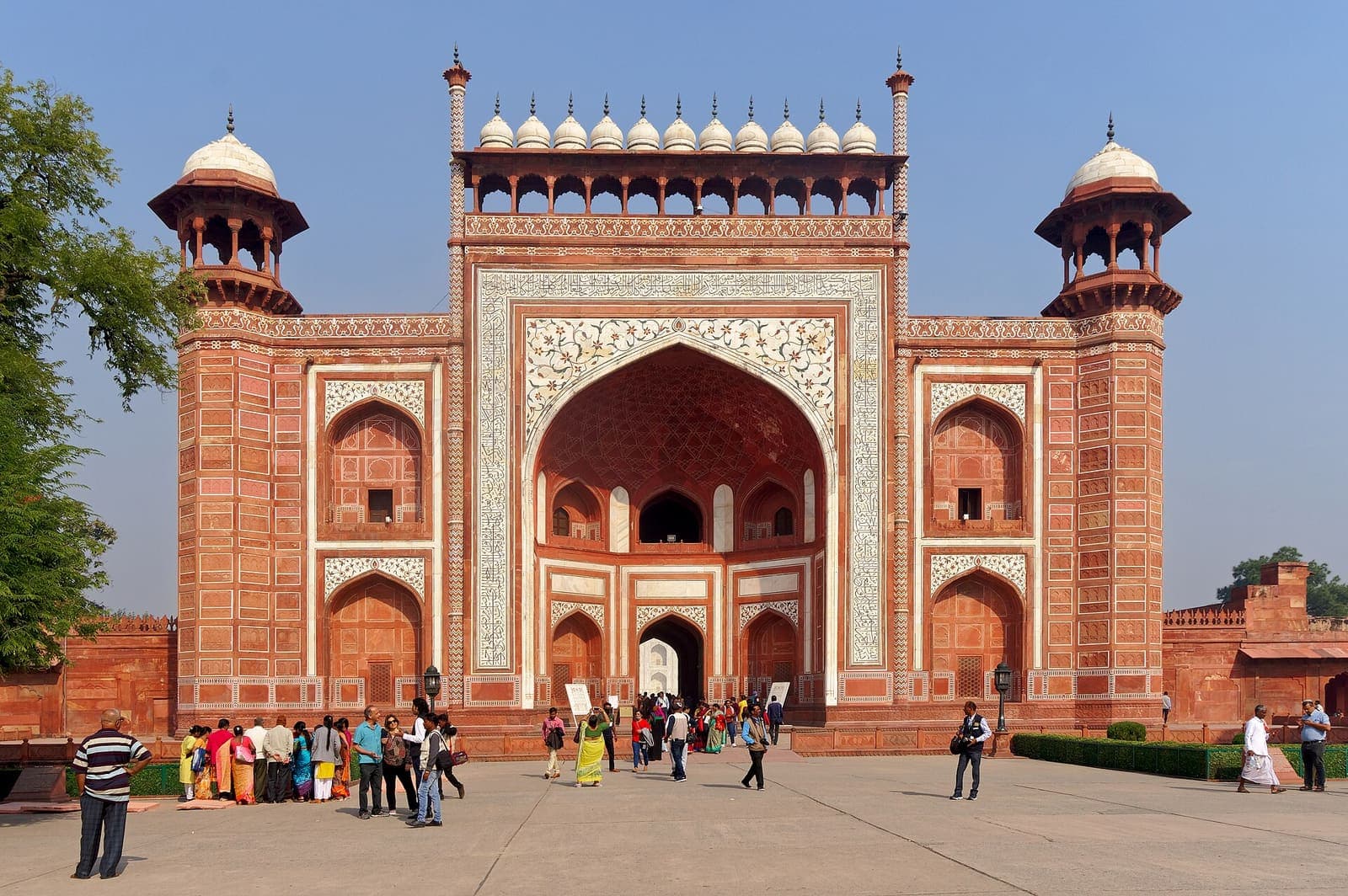
Photo: Jakub Hałun · Wikimedia Commons · CC BY-SA 4.0 · resized for web
Can you use the metro for the fort and old city?
Yes, and this is where it is most useful. From Taj Mahal station it is one stop to Dr. Ambedkar Chowk, for Agra Fort, and two to Mankameshwar, which the leaflet lists for Agra Fort railway station, Jama Masjid and Kinari Bazar. The fare is ₹10 or ₹15.
Agra Fort the monument, Agra Fort railway station and the metro stations near them are three different places. For the monument, use the visitor entrance in our Agra Fort guide. For a mainline train, use the station name and code on your ticket; with a suitcase and a fixed departure, a taxi to the door is usually simpler than the metro plus a walk.
For the bazaars, choose a short walking route with a known way back. The old-city walk guide is planned around a manageable loop from the Jama Masjid. Traffic, worship and everyday business carry on around visitors, so leave time for that.
How much is the Agra Metro, and how do you buy a ticket?
The fares in the operator’s leaflet are ₹10 for a trip of one station, ₹15 for two and ₹20 for three to six, so the whole open line costs ₹20. Fares for the longer journeys on the extension had not been published when we checked; expect them to be a little higher, and check at the station.
| Journey | Fare |
|---|---|
| One station, such as Taj Mahal to Dr. Ambedkar Chowk | ₹10 |
| Two stations, such as Taj Mahal to Mankameshwar | ₹15 |
| Three to six stations, such as Taj East Gate to Mankameshwar | ₹20 |
Buy tickets at the station counter, or use the operator’s Agra Metro ticketing app; download it from that official listing rather than an app with a similar name. For a family of four on a short hop, compare four fares and the walk at each end with one taxi to the door.
Is it convenient with luggage, a buggy or a wheelchair?
The operator’s leaflet says every station has a wheelchair facility for disabled passengers, and the new stations were inspected for their lifts and escalators. The stations are only part of the journey, though: list the walk from your room to the station, the lift, the train and the final approach to the sight, and judge the whole chain.
- Ask at the station which entrance has the lift.
- Check the baggage rules before arriving with large cases.
- Keep a taxi as the fallback if a lift or the final approach does not suit you.
The Taj Mahal accessibility guide covers the monument itself. With young children, a buggy can help on the platforms and less so on the old city’s pavements.
A sightseeing day that uses the metro for one useful leg
The line suits a Taj-then-fort day. Reach the Taj by taxi or on foot for the early opening, then ride the metro on to the fort and the old city.
| Part of the day | How to get there |
|---|---|
| Taj Mahal, early | A taxi or walk to your gate; the metro if you are a short walk from a station. |
| Agra Fort, late morning | Taj Mahal station to Dr. Ambedkar Chowk, one stop, ₹10. |
| Jama Masjid and Kinari Bazar | One more stop to Mankameshwar, or walk. |
| Lunch or the hotel | A taxi or auto-rickshaw from the old city, often simpler than doubling back. |
If you only have a few hours between trains, the half-day Agra planner helps you decide whether a second sight fits at all.
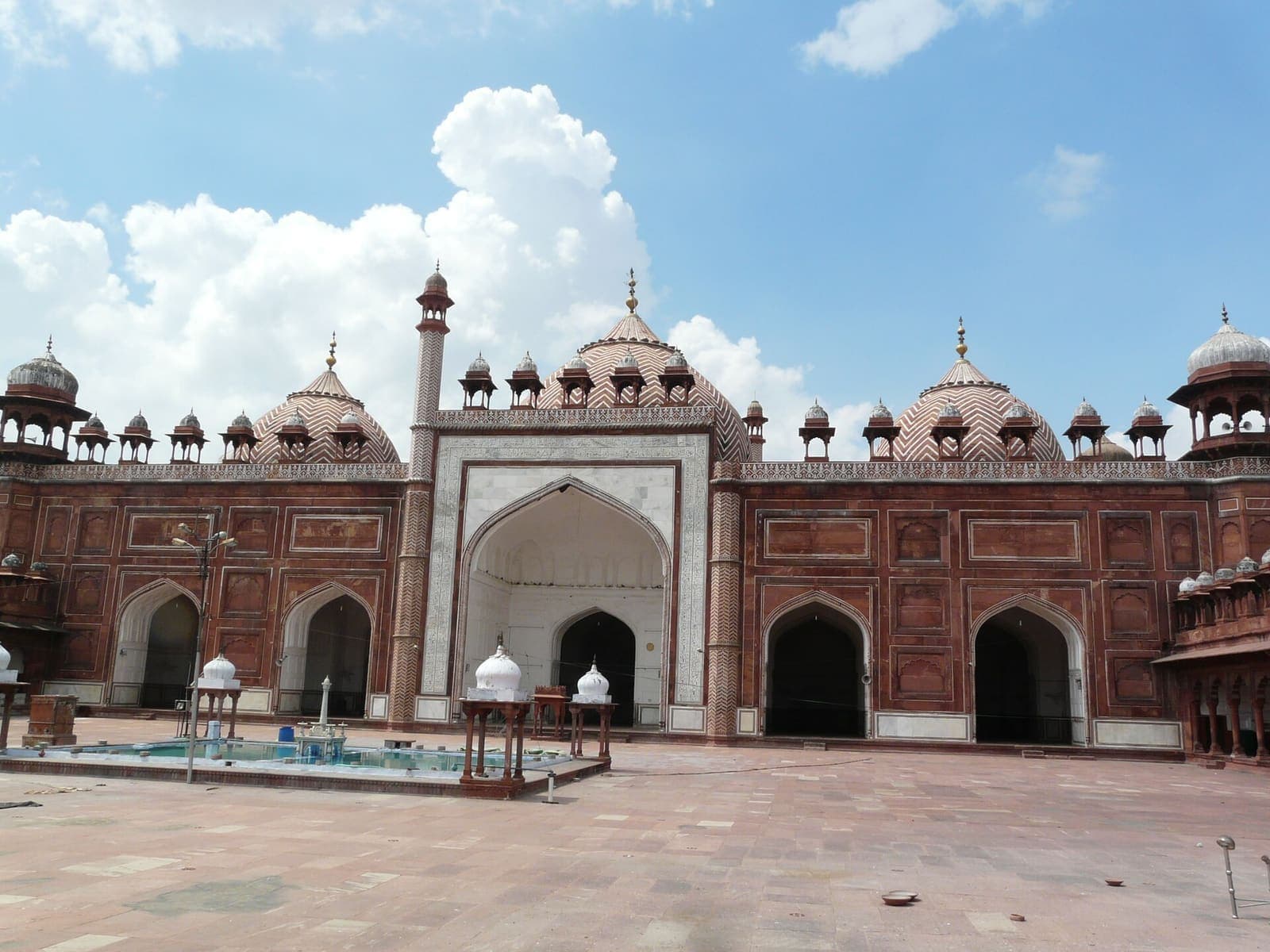
Photo: Varun Shiv Kapur · Wikimedia Commons · CC BY 2.0 · resized for web
Does the metro take you directly to Altitude?
No. Altitude Rooftop Lounge, which publishes this guide, is at Jaipur House, MG Road 2, on the west side of the city, and no metro station near it was open in October 2026. From the Taj it is about 6.5 km, roughly 25 minutes by taxi or auto-rickshaw, and from Agra Fort railway station, near Mankameshwar, about 5 km. Its contact page has the exact location, and the menu is online to look at before you go.
Metro facts were checked on 22 October 2026 against the operator’s leaflet and dated news reports. The network is growing, so confirm the stations open, the hours and the fare on the operator’s site on the day you travel.