Golden Triangle tour itinerary: Delhi, Agra and Jaipur in 4, 5 or 7 days
Delhi, Agra and Jaipur fit into four days, sit better in five and slow down in seven. Here are all three plans, day by day, with real travel times, the trains worth booking, the closing days that catch people out and where Fatehpur Sikri fits.
By Priyanka Singh, Travel expert
 (opens in a new tab)
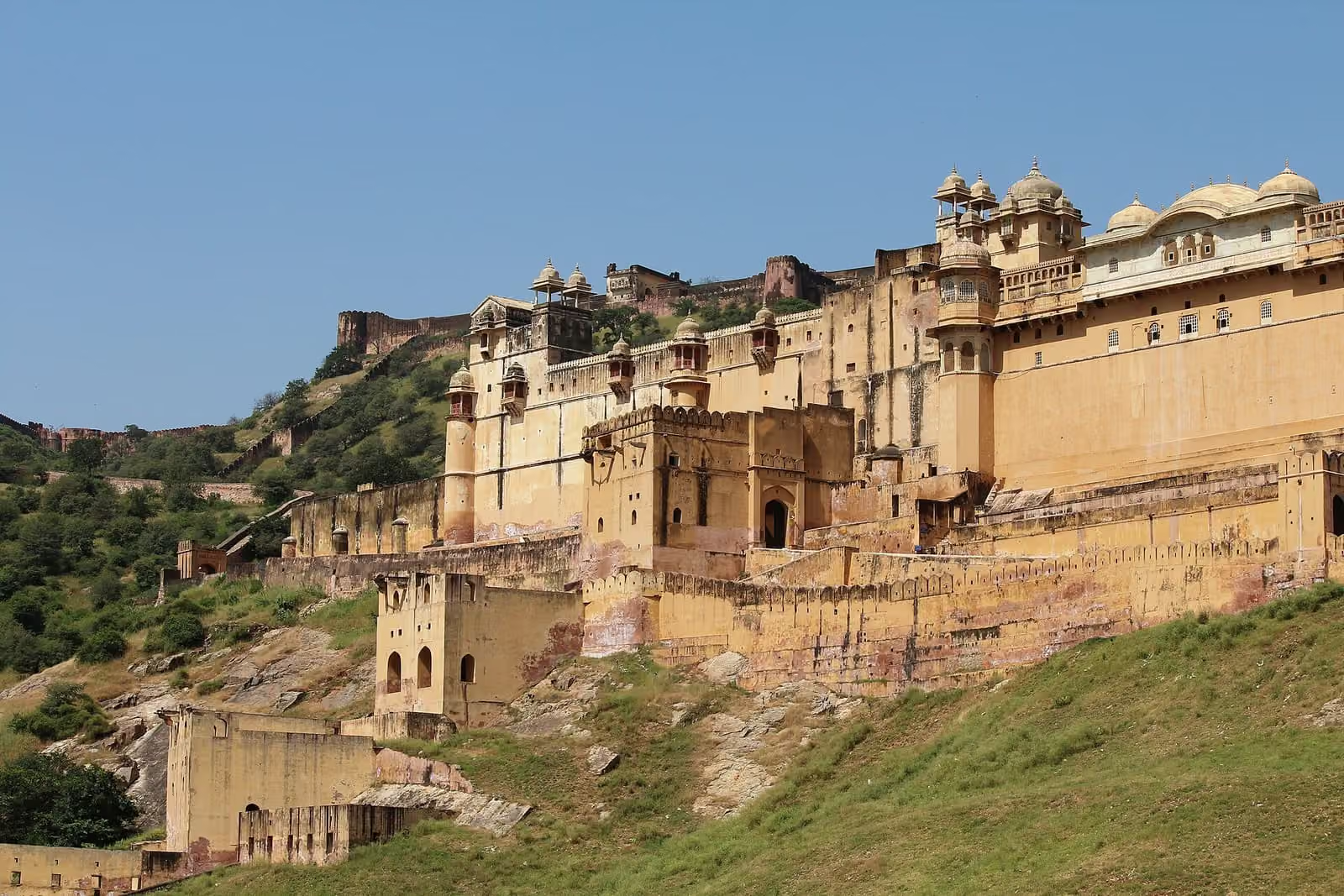
Photo: Rijin S · Wikimedia Commons · CC BY-SA 4.0 · resized for web
A Golden Triangle tour is a loop of about 730 km through Delhi, Agra and Jaipur that needs four days at least, five to be comfortable and seven to go slowly. The best way round is Delhi to Agra by train, Agra to Jaipur by road via Fatehpur Sikri, then back to Delhi by train or car.
| Fact | Detail |
|---|---|
| The loop | Delhi, Agra, Jaipur and back to Delhi: about 730 km by road |
| Days needed | Four at the least, five comfortable, seven unhurried |
| Delhi to Agra | About 1 hr 40 min by the fastest trains; 3 to 4 hours by road |
| Agra to Jaipur | About 240 km: 4½ to 5 hours by road, or about 4 hr 10 min by train |
| Jaipur to Delhi | About 3 hr 45 min by the fastest train; 4 to 5 hours by road |
| Best months | October to March |
| Closed days | Taj Mahal every Friday; Red Fort, Delhi, every Monday |
| Taj Mahal ticket | ₹1,100 for foreign visitors, plus ₹200 for the main mausoleum |
| Visa | e-Tourist visa online, at least four days before you arrive |
The train times in this guide were checked against the published timetable on 22 October 2026. Timetables change, so confirm your train, date and station on IRCTC or the railways’ NTES enquiry service before you book.
Delhi, Agra and Jaipur: the route and travel times
The three cities sit 205 to 290 km apart by road, so each leg is three to five hours by car and less by the fastest trains. Delhi is the natural start and finish, and the loop runs as well in either direction.
| Leg | How long it takes |
|---|---|
| Delhi to Agra, about 205–220 km | Train: about 1 hr 40 min on the Gatimaan Express or the Vande Bharat, 1 hr 50 min on the Shatabdi. Road: 3 to 4 hours, mostly on the 165 km Yamuna Expressway. |
| Agra to Jaipur, about 240 km | Road: 4½ to 5 hours on NH-21, or about 246 km by way of Fatehpur Sikri. Train: about 4 hr 10 min from Agra Fort station. |
| Jaipur to Delhi, about 270–290 km | Train: 3 hr 45 min on the Vande Bharat to Delhi Cantt, about 5 hours on the Ajmer Shatabdi to New Delhi. Road: 4 to 5 hours. |
So the mix that works is the train to Agra, which takes about half as long as the road and skips Delhi’s traffic; a car and driver from Agra to Jaipur, because the train saves little and misses Fatehpur Sikri; and either for the way back. Train numbers, stations and booking on IRCTC as a foreign visitor are in the Delhi to Agra guide. The drive, its tolls and its stops are in the Jaipur to Agra road trip, which works as well in reverse.
Golden Triangle tour in 4 days
Four days is the shortest Golden Triangle tour that still gives each city a proper day. It means early starts, and travelling between cities in the morning rather than after dark.
| Day | Plan |
|---|---|
| Day 1: Delhi | Old Delhi in the morning: the Red Fort, the Jama Masjid and the lanes of Chandni Chowk. Humayun’s Tomb in the afternoon. |
| Day 2: Delhi to Agra | Morning train to Agra Cantt. Agra Fort, then Itimad-ud-Daulah across the Yamuna and Mehtab Bagh for the Taj at sunset. Dinner in Agra. |
| Day 3: Agra to Jaipur | The Taj Mahal at sunrise, breakfast, then the road to Jaipur with two hours at Fatehpur Sikri. Jaipur by about 5:00 PM. |
| Day 4: Jaipur | Amber Fort first thing, then the City Palace, Jantar Mantar and the Hawa Mahal. The 5:35 PM Shatabdi reaches New Delhi at 10:30 PM. |
What gets cut is New Delhi beyond Humayun’s Tomb, any slack in Agra and most of Jaipur’s old city. Flying out of Delhi? Its airport is on the Jaipur side of the city, about 256 km by road from Jaipur, so a car can take you straight there, or to an airport hotel, without crossing Delhi.
Golden Triangle tour in 5 days
Five days is the length to aim for on a first trip. The extra day goes to Jaipur, which has more to see than one day allows, and the two travel days stop feeling like a race.
| Day | Plan |
|---|---|
| Day 1: Delhi | Old Delhi in the morning, Humayun’s Tomb after lunch, and the Qutb Minar if the traffic allows. |
| Day 2: Delhi to Agra | Morning train. Agra Fort, Itimad-ud-Daulah, then Mehtab Bagh at sunset. Dinner in Agra. |
| Day 3: Agra to Jaipur | The Taj Mahal at sunrise, then Fatehpur Sikri on the road to Jaipur. |
| Day 4: Jaipur | Amber Fort first thing, Jaigarh Fort above it, and Nahargarh for the view over the city at the end of the day. |
| Day 5: Jaipur to Delhi | The City Palace, Jantar Mantar, the Hawa Mahal and the old city’s bazaars, then the evening Shatabdi or a car back to Delhi. |
With a sixth night in Jaipur, the 7:47 AM Vande Bharat (not on Wednesdays) has you at Delhi Cantt by 11:30 AM, in good time for an evening flight.
A 7-day itinerary, at an easier pace
Seven days turns the loop into a holiday rather than a timetable. It adds a second day in Delhi, a full day in Agra and the stepwell at Abhaneri, and it leaves room for a long lunch.
| Day | Plan |
|---|---|
| Day 1: Delhi | Old Delhi: the Red Fort, the Jama Masjid and Chandni Chowk. |
| Day 2: Delhi | Humayun’s Tomb in the morning, the Qutb Minar in the afternoon. |
| Day 3: Delhi to Agra | Morning train. Agra Fort and Itimad-ud-Daulah, then Mehtab Bagh at sunset. |
| Day 4: Agra | The Taj Mahal at sunrise, a long lunch, Akbar’s tomb at Sikandra in the afternoon, and a night out. |
| Day 5: Agra to Jaipur | Fatehpur Sikri in the morning, Chand Baori at Abhaneri in the afternoon, Jaipur by evening. |
| Day 6: Jaipur | Amber Fort early, Jaigarh Fort above it, Nahargarh at the end of the day. |
| Day 7: Jaipur to Delhi | The City Palace, Jantar Mantar and the Hawa Mahal, then the evening train or a car to Delhi. |
From November to February, swap Abhaneri for a night in Bharatpur and Keoladeo National Park at dawn, the bird sanctuary on the same road.
Car and driver or train: which is better?
A mix beats either on its own. The fast trains win between Delhi and Agra and between Jaipur and Delhi, and a car wins from Agra to Jaipur, where the sights are on the road. These are the trains that fit the plans above.
| Train | Times |
|---|---|
| Delhi to Agra: Vande Bharat, Shatabdi or Gatimaan Express | Mornings from Hazrat Nizamuddin or New Delhi, 1 hr 40 min to 1 hr 50 min |
| Agra to Jaipur: Intercity 12195, daily | Agra Fort 6:00 AM, Jaipur 10:15 AM |
| Agra to Jaipur: Superfast 22988, daily | Agra Fort 2:35 PM, Jaipur 6:45 PM |
| Jaipur to Delhi: Vande Bharat 20977, not Wednesdays | Jaipur 7:47 AM, Delhi Cantt 11:30 AM |
| Jaipur to Delhi: Ajmer Shatabdi 12016, daily | Jaipur 5:35 PM, New Delhi 10:30 PM |
By train. Book on IRCTC, Indian Railways’ own booking site, as soon as your dates are fixed, and check the running status on the day, since winter fog delays trains. From Delhi, get off at Agra Cantt; for Jaipur, leave from Agra Fort station. A Vande Bharat between Agra and Jaipur was proposed in 2025, but none is in the timetable as of October 2026.
By car. A car and driver takes you door to door and stops where you ask. Get the quote in writing, with the tolls, the parking, the driver’s meals and nights, and an all-India tourist permit, which lets the car cross from Uttar Pradesh into Rajasthan without a separate state permit. Drive in daylight: the UK’s travel advice for India says to avoid travelling at night and in fog, when accidents are common.
When is the best time for a Golden Triangle tour?
October to March is the best time for a Golden Triangle tour: the monsoon is over, and India’s official tourism site calls these Delhi’s cooler months. The rest of the year is harder work.
- October, November, February and March: warm days and cool evenings, the easiest months for long days on your feet.
- December and January: the coldest weeks, with nights down to about 3°C in Delhi and Jaipur, and fog that can delay trains and hide the Taj at sunrise. Pack layers.
- April to June: highs in the mid-40s °C by May and June. Sightsee from opening time until late morning and rest through the afternoon.
- Late June to September: the monsoon, with humid days and heavy downpours.
Before you fly
Most visitors from the UK, Europe and the US travel on an e-Tourist visa, applied for on the Indian government’s e-Visa site. Apply at least four days before you arrive: no earlier than 30 days ahead for the 30-day visa, or 120 days ahead for the one-year and five-year visas. Your passport needs six months of validity when you apply and two blank pages, and the site says no agent is needed, so ignore anyone selling a faster visa. Those rules were checked on 22 October 2026.
Since 1 April 2026, foreign nationals and OCI cardholders have also had to fill in an online e-Arrival card within 72 hours before landing, in place of the old paper form, as Business Today reported. It is not a visa; you show its QR code at immigration.
What to see in Delhi, Agra and Jaipur
Nine of UNESCO’s World Heritage listings are in or near the three cities, counting Fatehpur Sikri and Amber Fort, so the work is in choosing. These are the sights the plans above are built on.
Delhi
Old Delhi is Shah Jahan’s city. His palace fortress, the Red Fort, is open from 9:30 AM to 4:30 PM except on Mondays, and the Jama Masjid stands just west of it, with the lanes of Chandni Chowk around both. The older monuments are to the south: Humayun’s Tomb, the first garden tomb on the subcontinent and an inspiration for the Taj, and the Qutb Minar, a 72.5-metre tower built in the early 13th century. The Metro is the easy way across the city.
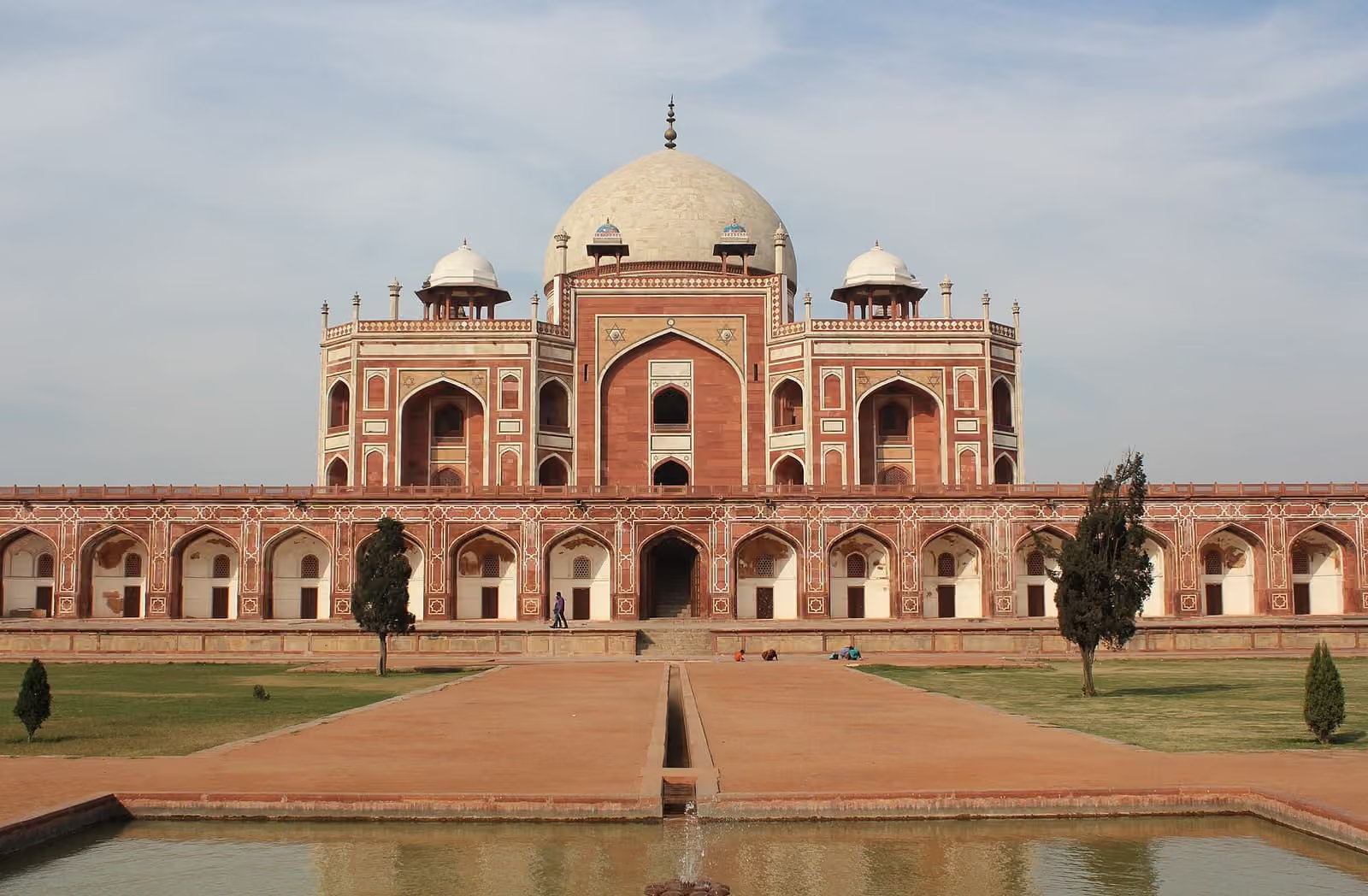
Photo: Arian Zwegers · Wikimedia Commons · CC BY 2.0 · resized for web
Agra
Agra is the Taj Mahal, and the Taj is best at sunrise. The Taj opens 30 minutes before sunrise and closes 30 minutes before sunset, every day except Friday, and the official Taj Mahal website gives the foreign visitor’s ticket as ₹1,100, plus ₹200 for the main mausoleum, with ₹50 off online. The guide to the Taj at sunrise covers the gates and the queue, and our Taj Mahal timings guide has the opening and closing times for your dates.
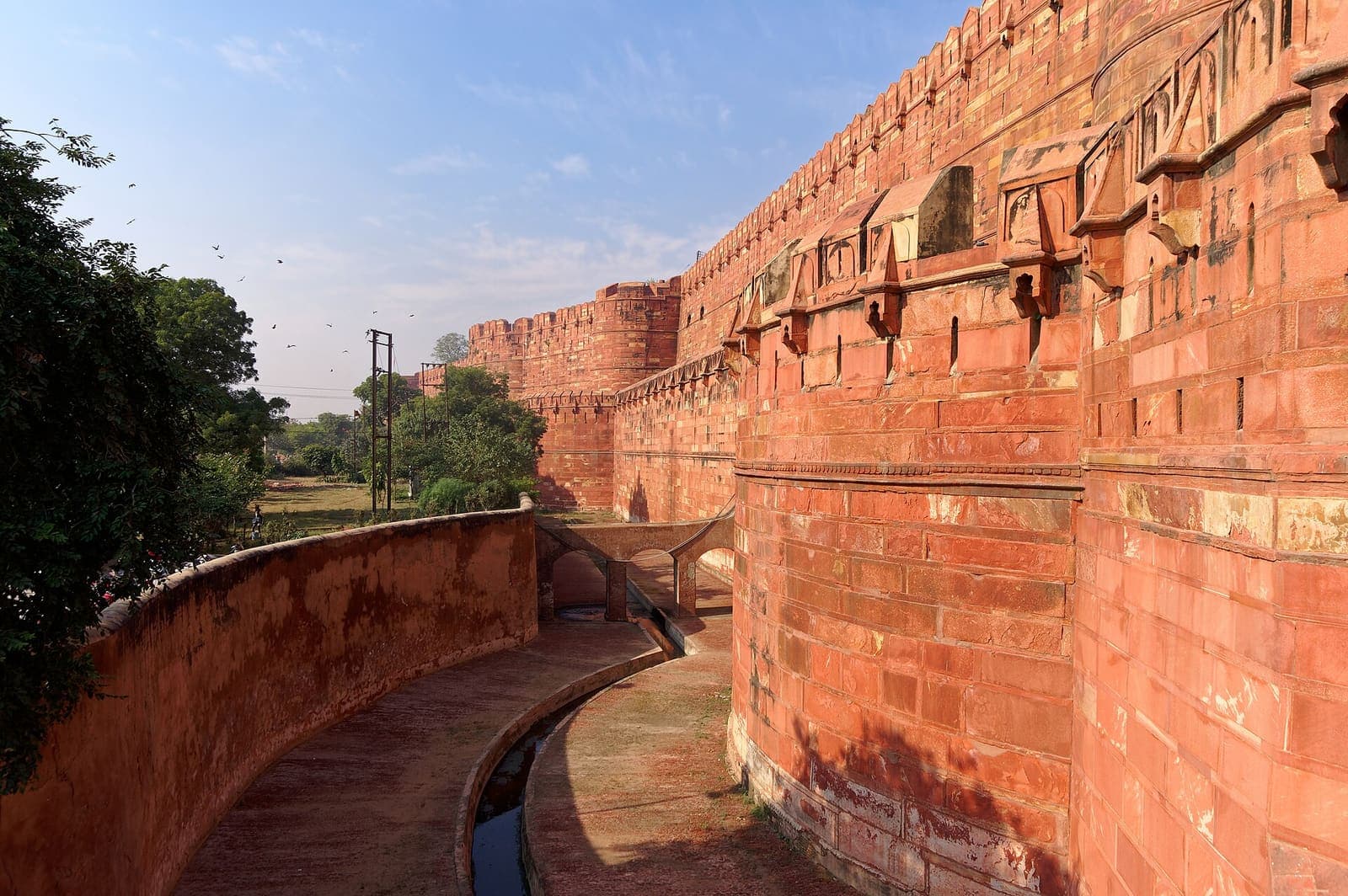
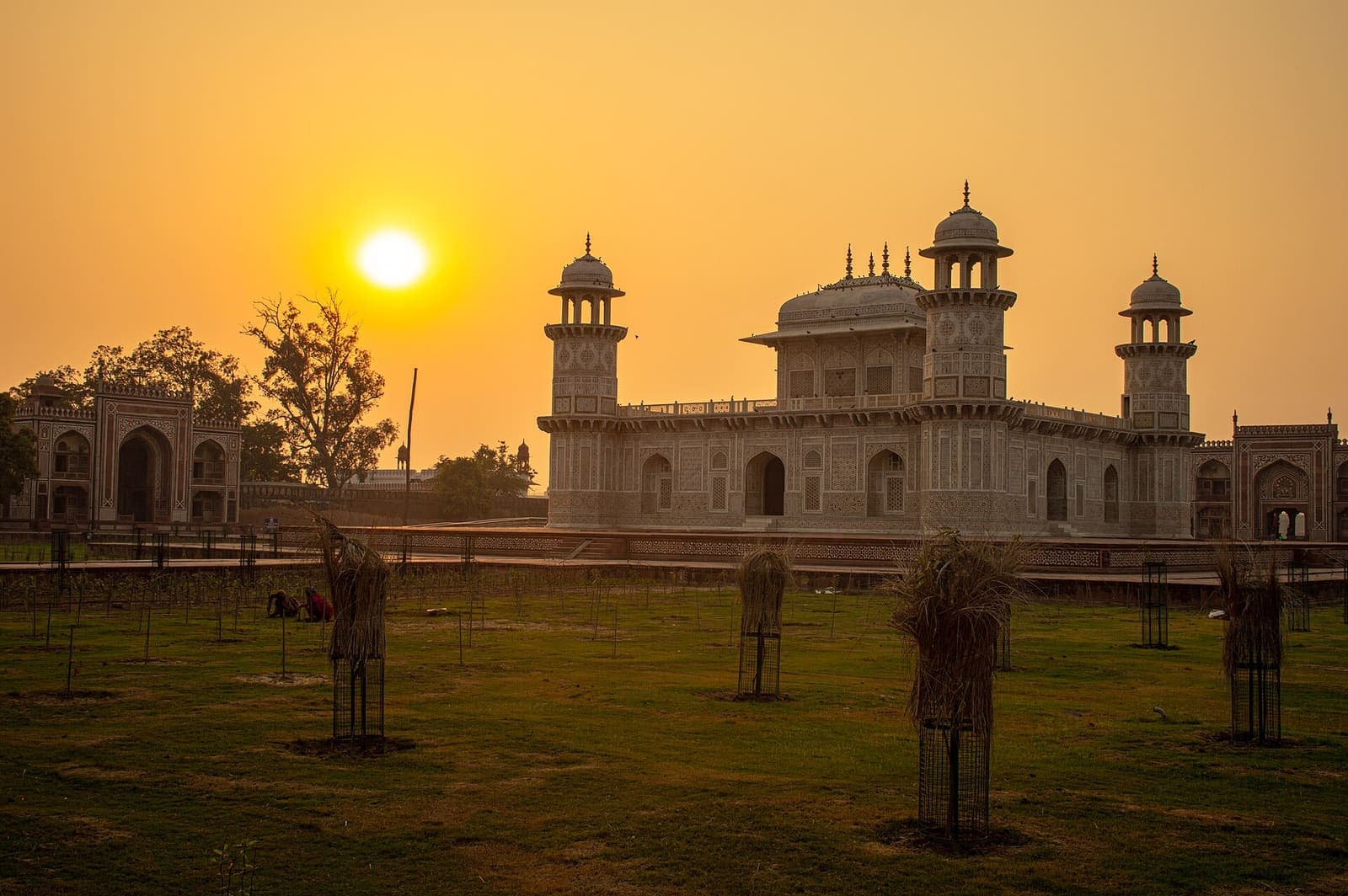
Around the Taj are Agra Fort, open on Fridays too; Itimad-ud-Daulah, the “Baby Taj”; and Mehtab Bagh across the Yamuna, for the Taj at sunset. The full list of places to visit in Agra ranks ten.
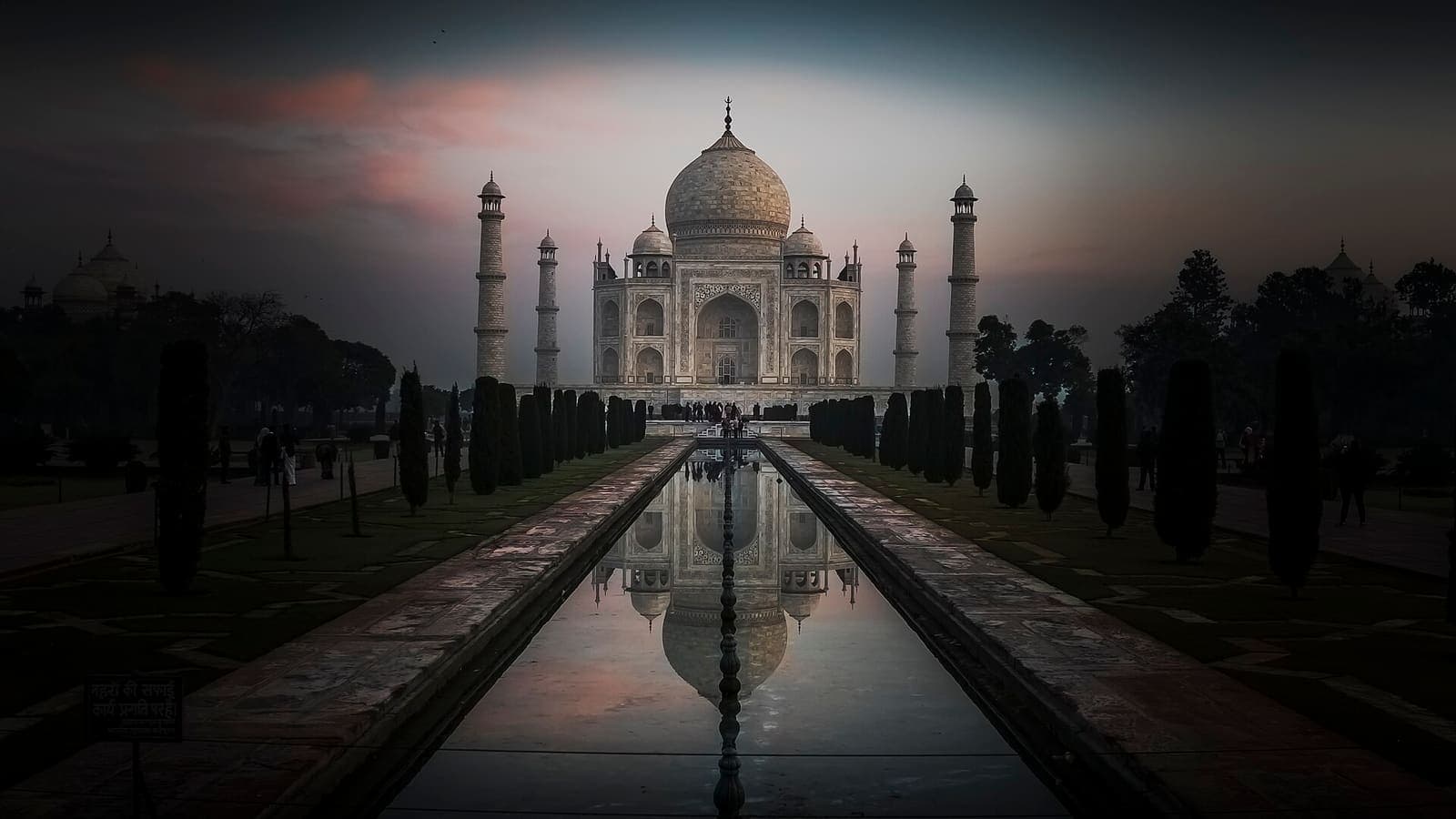
Photo: Gunjan Pandey · Wikimedia Commons · CC BY-SA 4.0 · resized for web
Your evening in Agra deserves a plan too. Altitude Rooftop Lounge, the rooftop restaurant that publishes this journal, is on the top floor above MG Road 2 at Jaipur House, on the west side of the city, about 25 minutes from the Taj. It is open every day from 12:00 PM to 12:30 AM, with an English menu that marks every dish veg, non-veg or egg. There is a bar.
Altitude has no Taj view; for that, go to a hotel rooftop near the Taj’s East Gate before dark, and our guide to restaurants near the Taj Mahal covers the places closest to the gates. Booking a table at Altitude is free. Travellers on a foreign passport can order all drinks buy one, get one free between 1:00 PM and 7:00 PM, dine-in only, under the conditions set out on the offers page.
Jaipur
Jaipur’s walled old city, laid out on a grid by Sawai Jai Singh II from 1727, is a World Heritage site in its own right. Start at Amber Fort, 11 km out, commissioned in 1592 and listed by UNESCO with five other hill forts of Rajasthan, and go early. Back in the old city are the City Palace, where the royal family still lives in part; Jantar Mantar, an early 18th-century observatory of about 20 fixed instruments; and the Hawa Mahal. Nahargarh, on the ridge above the city, is for the view at the end of the day.
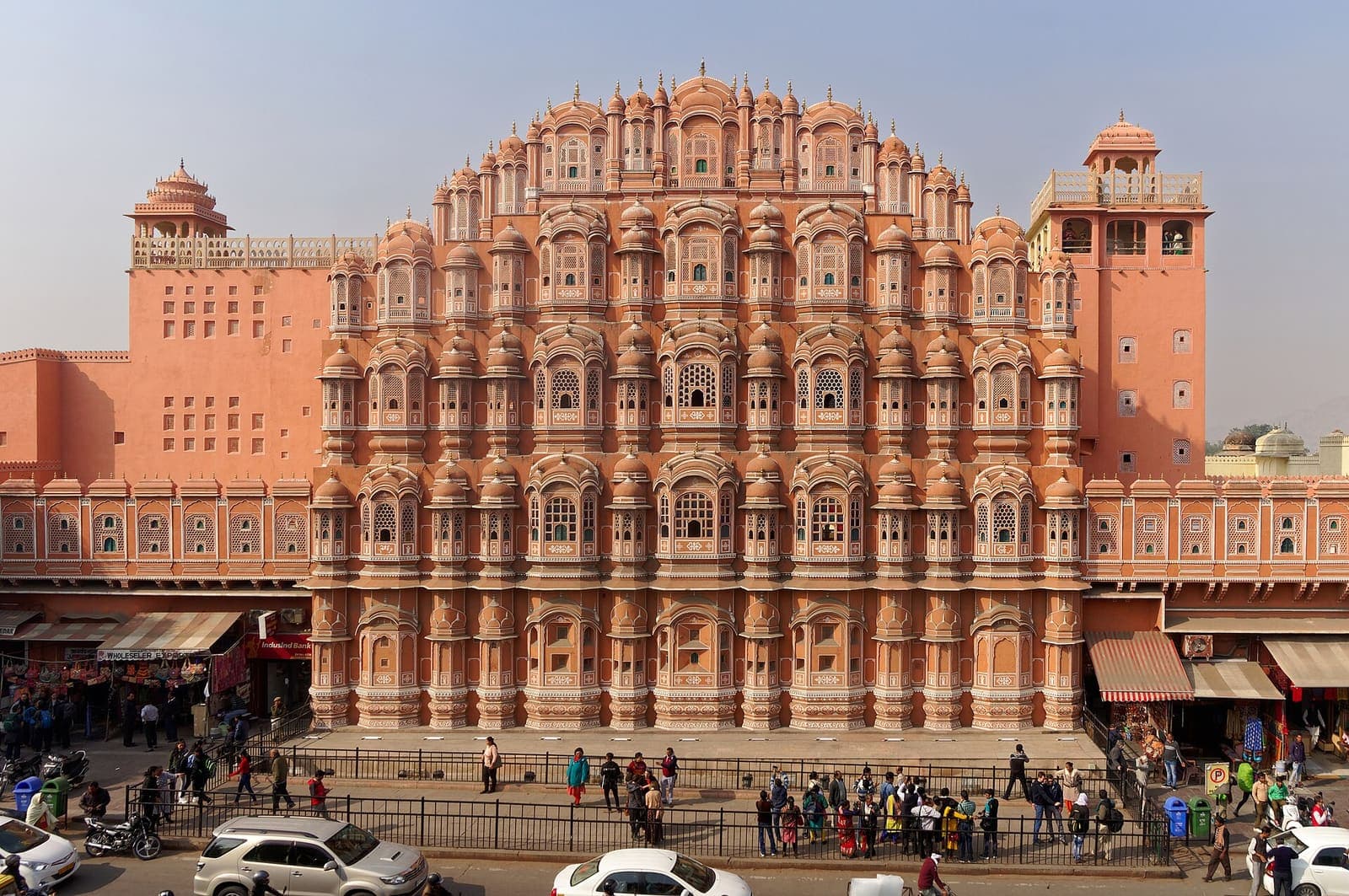
Photo: Jakub Hałun · Wikimedia Commons · CC BY-SA 4.0 · resized for web
Where does Fatehpur Sikri fit?
Fatehpur Sikri fits on the road from Agra to Jaipur, about 40 km west of the Taj and beside the highway, so it costs two to three hours rather than a day. Akbar’s red sandstone capital, a World Heritage site since 1986, is open from sunrise to sunset every day, Fridays included. At the counter, the palace ticket is ₹610 for foreign visitors and ₹50 for Indians; the Jama Masjid and the Buland Darwaza are free.
Leave Agra by 9:30 AM, after the Taj at sunrise, and you can give Fatehpur Sikri two hours and still reach Jaipur by late afternoon. Not driving on to Jaipur? See Fatehpur Sikri as a half-day trip from Agra instead: the Fatehpur Sikri day-trip guide has the order to walk it in and how to handle the touts.
A guided tour or on your own?
On your own is straightforward on this route, as long as you book the trains, the hotels and the car ahead. A guided tour buys you someone else doing that, plus a guide at each monument. There are three ways to do it.
- A guided package. Car, driver, hotels and a guide in each city, booked as one. The least effort; check exactly what the price includes.
- A car and driver, with guides on the spot. You choose the hotels and the pace, and hire a licensed guide at the Taj, Amber Fort or the Red Fort. Ask to see the licence, and agree the fee and the time first.
- Trains and taxis. The cheapest and the most flexible, with app cabs or prepaid taxis in each city and a taxi for Fatehpur Sikri.
Whichever you choose, say no to shopping stops you did not ask for: a driver or guide who steers you to a shop is often paid a commission by it. The UK’s advice warns that scammers and ticket touts target foreign visitors in tourist areas, and that people offering tickets and tours at railway stations may be running a scam. The US State Department rates India at Level 2, “exercise increased caution”, and Delhi, Agra and Jaipur are not in its higher-risk areas.
Adding Varanasi, Ranthambore or Khajuraho
The Golden Triangle extends easily in three directions. Give each add-on at least two nights.
- Varanasi. The Vande Bharat leaves New Delhi at 6:00 AM and reaches Varanasi at 2:00 PM, every day but Thursday, so the city on the Ganges fits before or after the loop.
- Ranthambore. The tiger reserve near Sawai Madhopur is about two hours from Jaipur by train, with several trains a day, and its fort is one of the six hill forts on UNESCO’s list. Check the safari season before you plan around it, and book safaris early.
- Khajuraho. The Vande Bharat from Delhi runs on from Agra Cantt at 7:45 AM to Khajuraho at 2:20 PM, not on Mondays, for the Chandela temples, a World Heritage site since 1986.