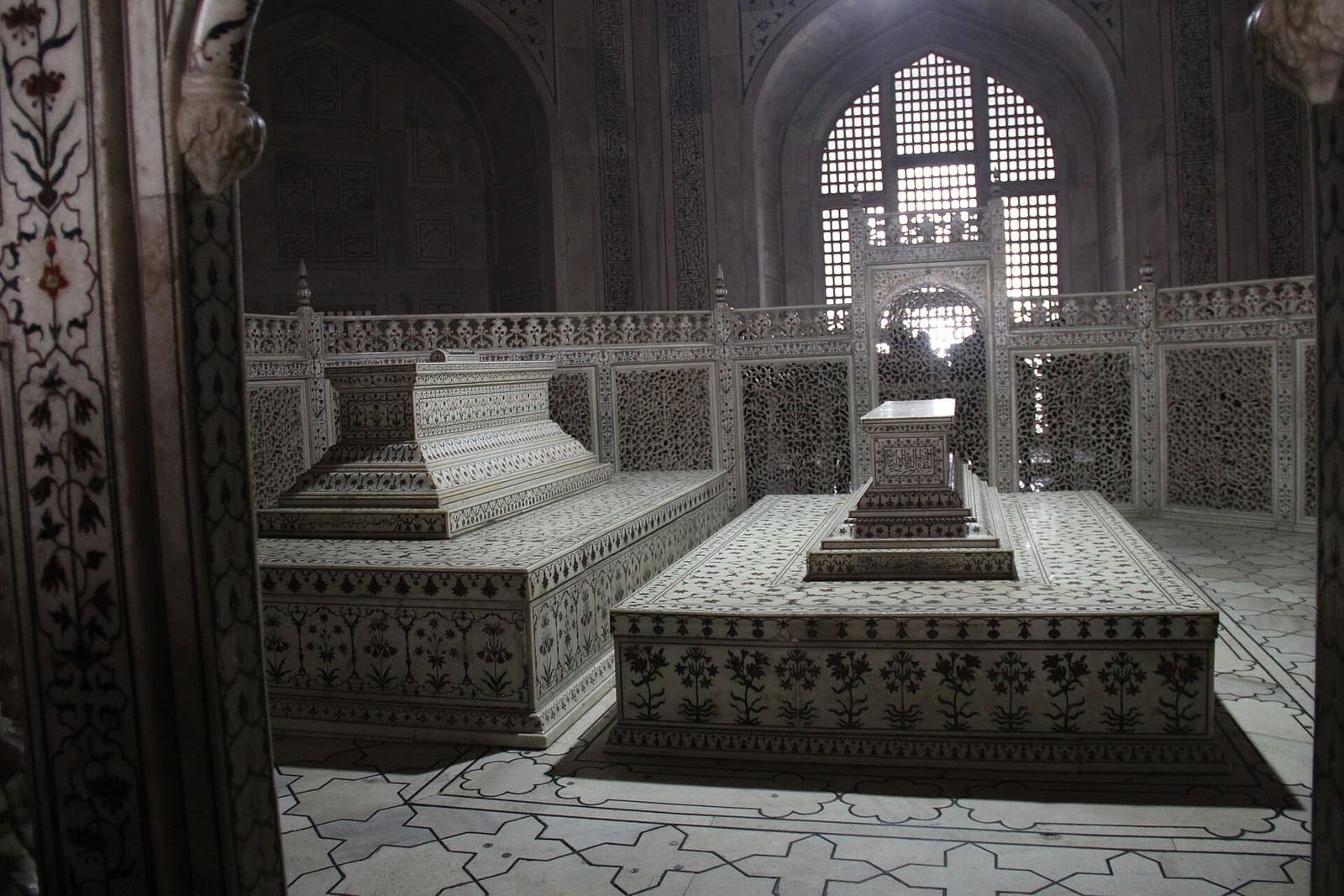
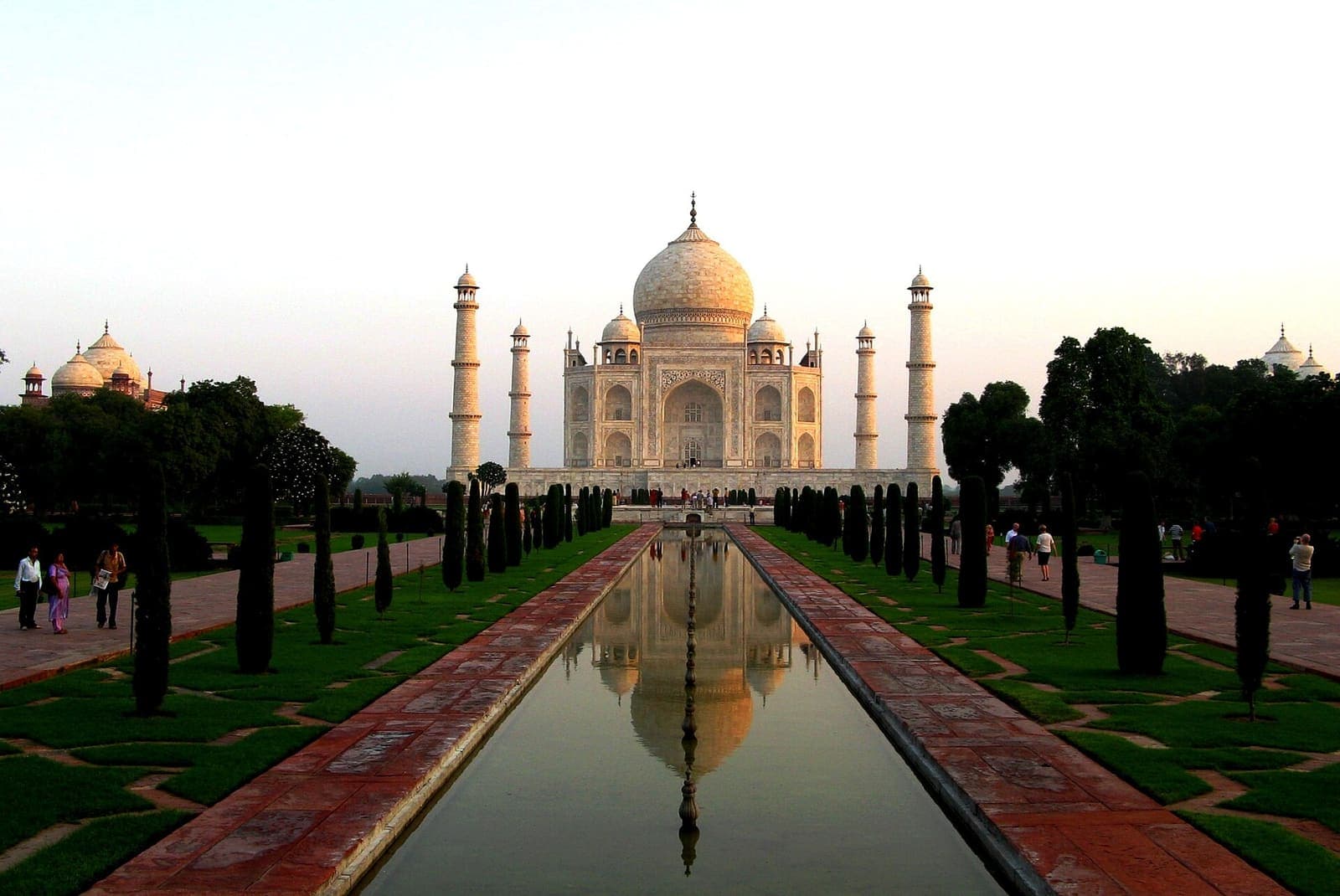
Places to visit in Agra, ranked: the 10 best sights, with tickets and timings
Agra has ten places worth your time, and the order you see them in matters as much as the list. Here they are ranked, with tickets and hours checked in October 2026, how long each one takes, which ones go together, and plans for one, two or three days.
By Priyanka Singh, Travel expert
 (opens in a new tab)
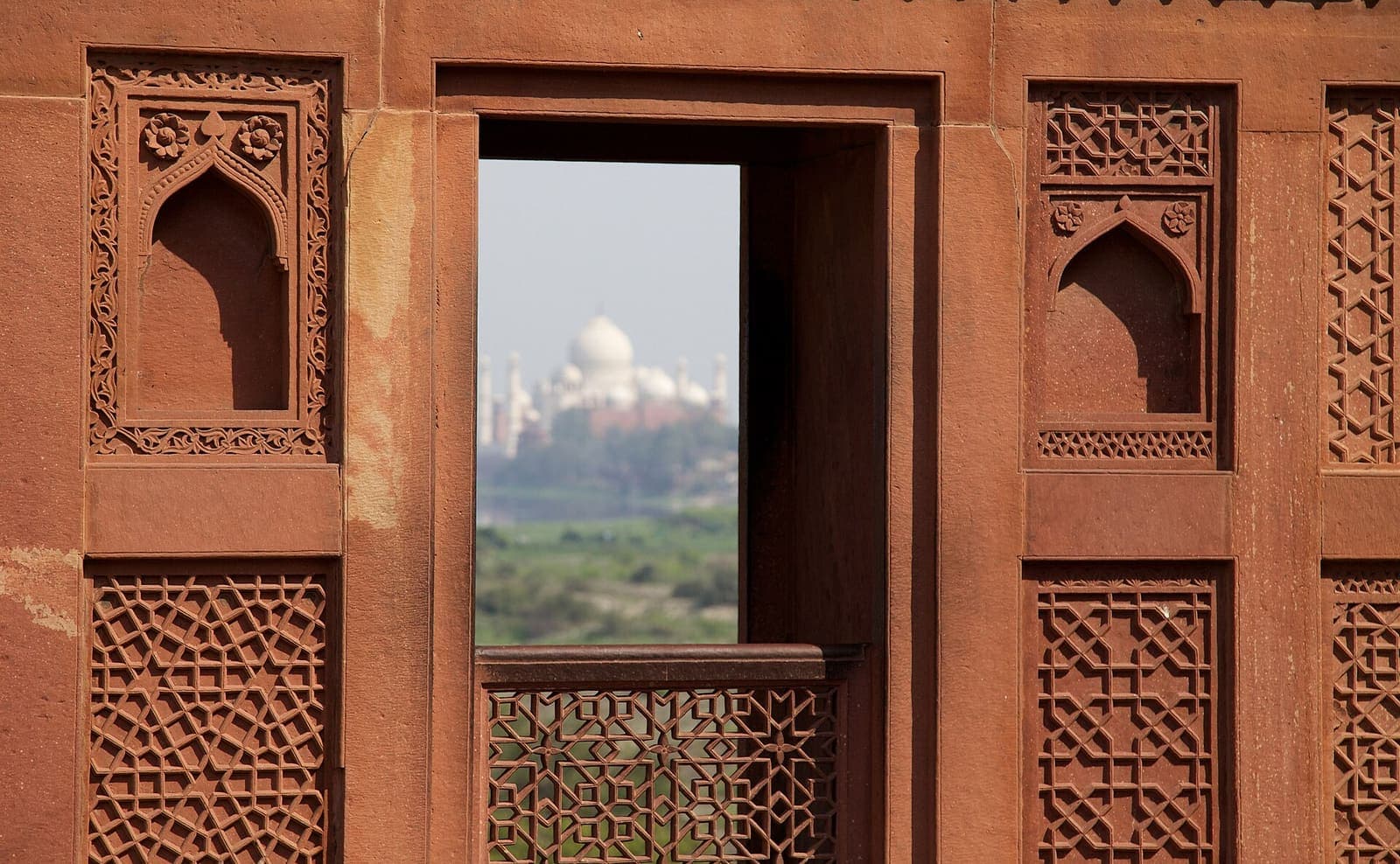
Photo: David Brossard · Wikimedia Commons · CC BY-SA 2.0 · resized for web
The best places to visit in Agra are the Taj Mahal, Agra Fort and Fatehpur Sikri, all three UNESCO World Heritage Sites, then the Baby Taj, Mehtab Bagh and Akbar’s tomb. All six are open every day except the Taj, which closes on Fridays. Give them two days, and a third for the other four.
| Place | Ticket (Indian / foreign) · hours · time to allow |
|---|---|
| 1. Taj Mahal | ₹50 / ₹1,100, plus ₹200 for the main tomb · 30 minutes before sunrise to 30 minutes before sunset, closed Fridays · 2 to 3 hours |
| 2. Agra Fort | ₹50 / ₹650 · sunrise to sunset, every day · 1.5 to 2 hours |
| 3. Fatehpur Sikri, 37 km west | ₹50 / ₹610 · sunrise to sunset, every day · half a day with the drive |
| 4. Itimad-ud-Daulah, the Baby Taj | ₹30 / ₹310 · sunrise to sunset, every day · about an hour |
| 5. Mehtab Bagh | ₹25 / ₹300 · sunrise to sunset, every day · about an hour, before sunset |
| 6. Akbar’s tomb, Sikandra | ₹30 / ₹310 · sunrise to sunset, every day · 1 to 1.5 hours |
| 7. Jama Masjid and Kinari Bazaar | No ticket · a working mosque, so go outside prayer times · 1 to 2 hours |
| 8. Chini ka Rauza | Free · sunrise to sunset, every day · 20 to 30 minutes |
| 9. Ram Bagh | ₹25 / ₹300 · sunrise to sunset, every day · 30 to 45 minutes |
| 10. Guru ka Taal | Free · early morning to night, every day · 30 minutes, an hour with the langar |
The order is a judgement of what each place adds to a first visit: how much you would miss it, and how easily it fits around the Taj. Children under 15 go free at every ticketed monument, visitors from SAARC and BIMSTEC countries pay ₹540 at the Taj and the Indian price or close to it elsewhere, and every price was checked on 16 October 2026 against the ASI Agra Circle’s fee table.
1. Taj Mahal: the one you came for
The Taj Mahal, a UNESCO World Heritage Site since 1983, is the white marble tomb that the emperor Shah Jahan built between 1631 and 1648 in memory of his favourite wife. Nothing else in Agra comes close, so plan the other nine around it, and give it your first clear morning.
- Open: 30 minutes before sunrise to 30 minutes before sunset, closed every Friday, according to the official visiting hours. In mid-November that is about 6:07 AM to 4:56 PM; our Taj Mahal timings guide has every month.
- Ticket: ₹50 for Indian and ₹1,100 for foreign visitors, plus ₹200 for the main tomb; online, ₹5 and ₹50 less. The windows at the East and West gates open an hour before sunrise, and the South Gate is exit only.
- Allow: two to three hours, plus the queue. Food, tripods and drones are not allowed in.
- Best time: opening time, the coolest and quietest hour of the day, when the light is soft. The hour-by-hour guide shows how the crowds and the heat build after that.
- Go with: Agra Fort, 2.5 km up the river, and Mehtab Bagh, directly across it.
For booking online step by step, the gates and the touts, see the Taj Mahal ticket guide; for what you may photograph and where, the Taj Mahal photography guide; and for where cars stop now that the East Gate’s Shilpgram car park has closed, the Taj Mahal parking guide.
2. Agra Fort: the Mughal palace city, open on Fridays
Agra Fort, a UNESCO World Heritage Site since 1983, is the walled red sandstone city that Akbar rebuilt from 1565 and where Shah Jahan later added white marble palaces. Walk from the Diwan-i-Am, the hall of public audience, to the Musamman Burj, the tower where Shah Jahan spent his last years as his son’s prisoner, with the Taj in view down the Yamuna.
- Open: every day from sunrise to sunset, Fridays included. Visitors enter by the Amar Singh Gate only; the counter takes UPI and cards, and audio guides are available.
- Ticket: ₹50 / ₹650, or ₹40 / ₹600 on a Friday; foreign visitors pay ₹600 with a same-day Taj ticket.
- Allow: an hour and a half to two hours.
- Best time: straight after the Taj, before the midday heat.
- Go with: the Taj, and the Jama Masjid and Kinari Bazaar, opposite the fort.
The Agra Fort guide has a route through the buildings that are open, and the evening show.
3. Fatehpur Sikri: Akbar’s abandoned capital
Fatehpur Sikri, about 37 km west of Agra, is the red sandstone city Akbar built in the second half of the 16th century and kept as his capital for only about ten years. UNESCO listed it in 1986. Its Jama Masjid is one of the largest mosques in India, and the Buland Darwaza gateway stands about 40 metres high.
- Open: every day from sunrise to sunset; in December the gates shut at about 5:25 PM.
- Ticket: ₹50 / ₹610, or ₹40 / ₹600 on a Friday.
- Allow: half a day, with about an hour’s drive each way.
- Best time: early morning, before the stone heats up; from October to March the afternoon works too.
- Go with: Akbar’s tomb at Sikandra, for a day built around Akbar.
The Fatehpur Sikri day trip covers taxis, buses, the walking order and the touts.
4. Itimad-ud-Daulah: the Baby Taj
Itimad-ud-Daulah, the Baby Taj, is the tomb the empress Nur Jahan built between 1622 and 1628 for her father, Mirza Ghiyas Beg, whose title it carries. Agra’s district website calls it the first Mughal building made entirely of white marble and the first to use stone inlay, pietra dura, on a large scale, which is why it is seen as a forerunner of the Taj. It is small and quiet, and the inlay rewards a slow look.
- Open: every day from sunrise to sunset.
- Ticket: ₹30 / ₹310, or ₹25 / ₹300 on a Friday; ₹300 for foreign visitors with a same-day Taj ticket.
- Allow: about an hour.
- Best time: late afternoon, on the way to Mehtab Bagh for sunset.
- Go with: Chini ka Rauza, 1 km north, then Ram Bagh and Mehtab Bagh, all on the far bank of the Yamuna. Itimad-ud-Daulah is about 4 km from Agra Fort, over the river.
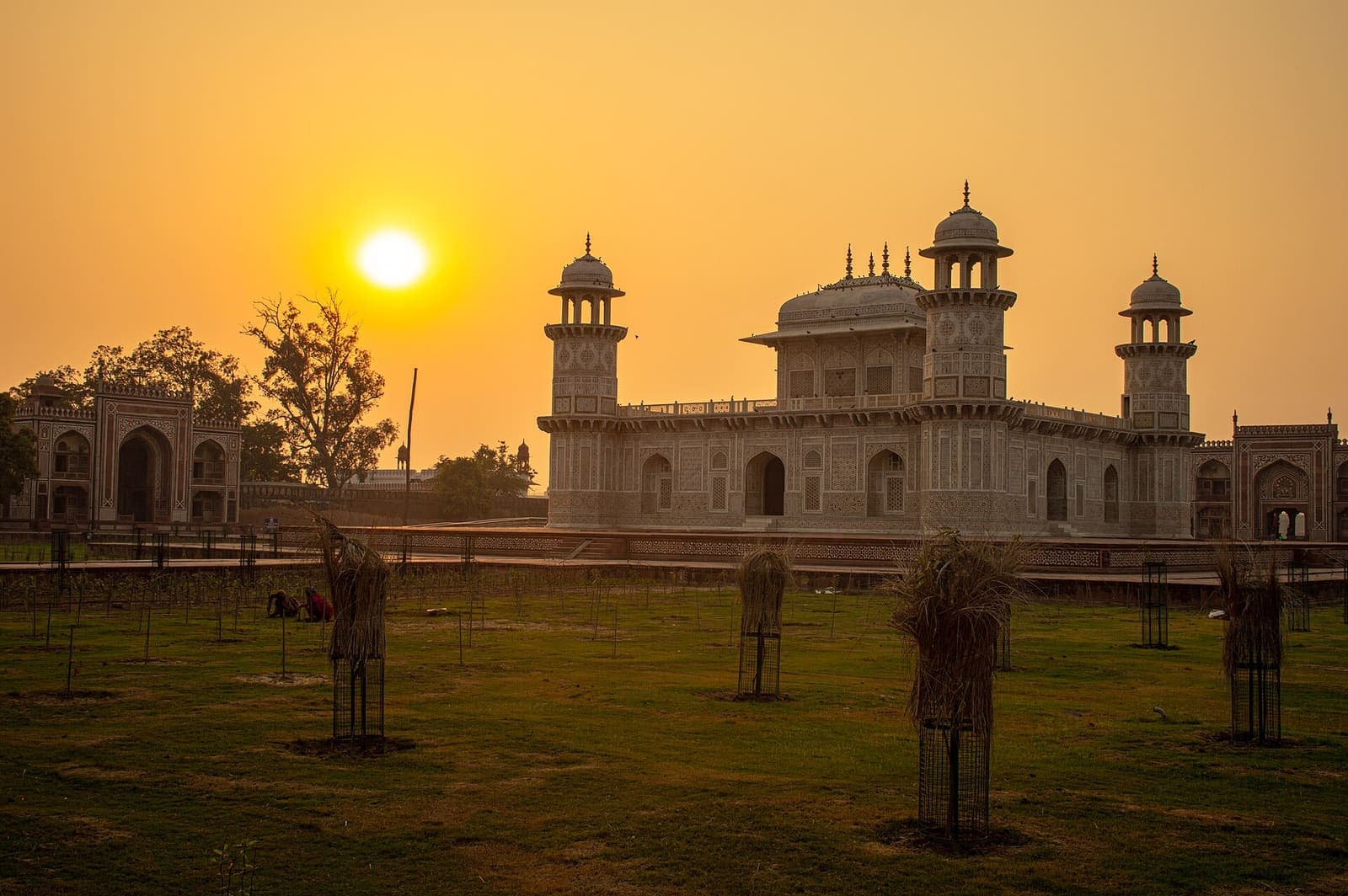
Photo: Philip Nalangan · Wikimedia Commons · CC BY 4.0 · resized for web
5. Mehtab Bagh: the Taj at sunset, from across the river
Mehtab Bagh is the square Mughal garden, about 300 metres a side, on the far bank of the Yamuna directly opposite the Taj. Babur first laid it out and Shah Jahan lined it up with the Taj, so from its riverside end you see the tomb straight on, with the river in front.
- Open: every day from sunrise to sunset, Fridays included.
- Ticket: ₹25 / ₹300, the same every day.
- Allow: about an hour.
- Best time: the last hour before sunset. There are no food stalls inside, so carry water.
- Go with: Itimad-ud-Daulah and Chini ka Rauza, on the same bank. From Agra Fort it is about 8 km by road, over the bridge.
On a Friday, when the Taj is shut, Mehtab Bagh is the place to see it. The Mehtab Bagh guide has the best hour, the viewpoints nearby and the Black Taj legend.
6. Akbar’s tomb, Sikandra: a garden with blackbuck
Akbar’s tomb at Sikandra, on the Delhi road about 10 km from the city centre, is the emperor’s own mausoleum, begun by Akbar and finished by his son Jahangir in 1613. A gateway topped with four white marble minarets opens on a 119-acre garden where blackbuck graze, and the five-storey tomb of red sandstone and marble stands in the middle.
- Open: every day from sunrise to sunset.
- Ticket: ₹30 / ₹310, or ₹25 / ₹300 on a Friday.
- Allow: an hour to an hour and a half.
- Best time: early morning or the last two hours before closing, when it is cooler.
- Go with: Mariam-uz-Zamani’s tomb, 1 km away (₹25 / ₹300), Guru ka Taal on the same highway, and Fatehpur Sikri the same day.
The guide to Akbar’s tomb walks you through it in order, from the gateway to the grave.
7. Jama Masjid and Kinari Bazaar: the old city
The Jama Masjid, opposite Agra Fort, is the great mosque that Jahanara Begum, Shah Jahan’s daughter, completed in 1648, its domes patterned in a zigzag of marble and red stone. Behind it, Kinari Bazaar and the lanes off it are the old city at full volume: cloth, shoes, jewellery, spices, marble and snack stalls, each lane with its own trade.
- Open: there is no ticket. It is a working mosque, so go outside prayer times, and above all avoid Friday’s midday prayer.
- Dress: cover shoulders and knees, and leave your shoes at the door.
- Allow: an hour or two.
- Best time: late morning, straight after the Fort, or late afternoon for the bazaar.
- Go with: Agra Fort. Ask your hotel whether the bazaar’s shops are open on the day you go.
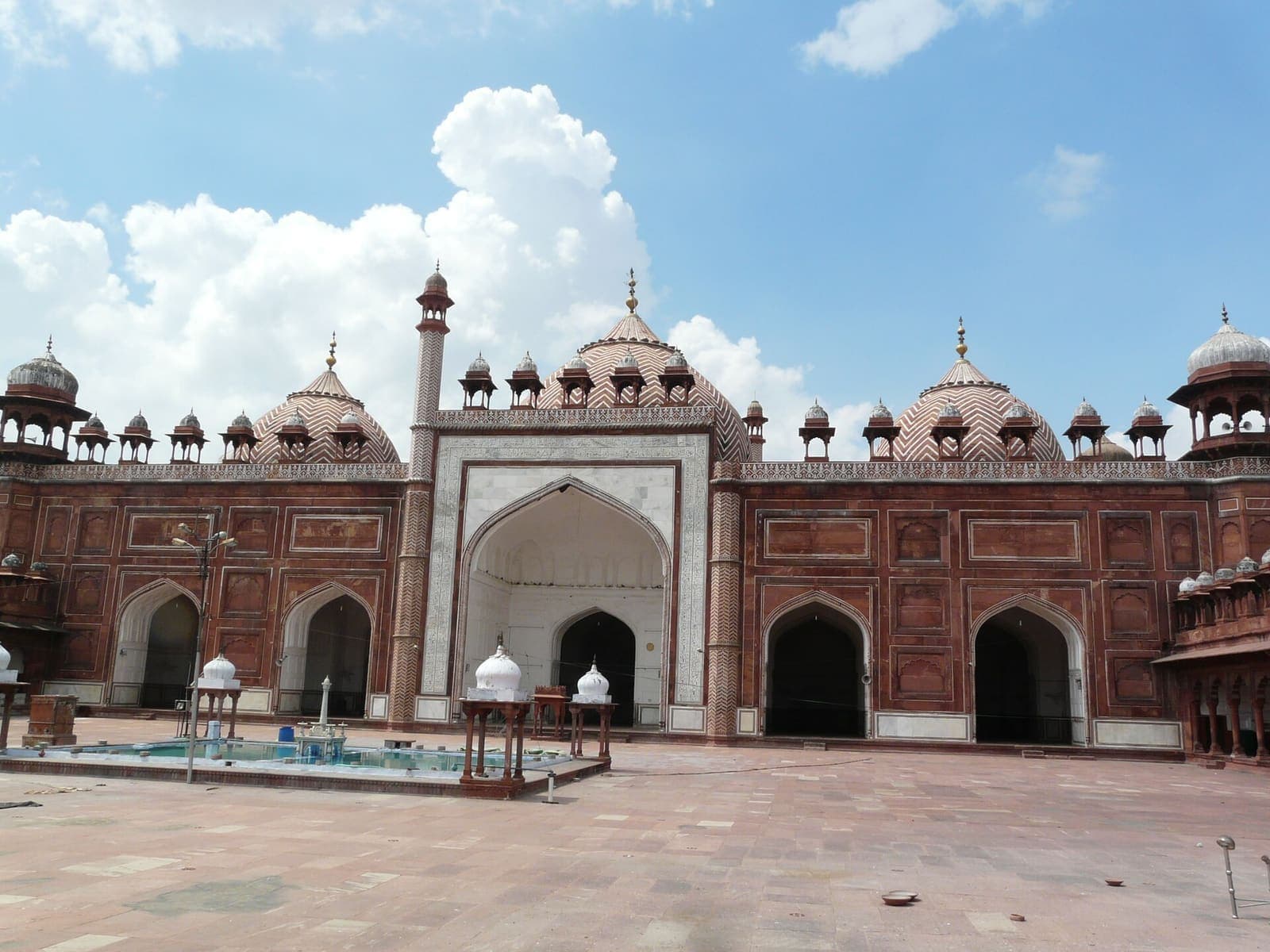
Photo: Varun Shiv Kapur · Wikimedia Commons · CC BY 2.0 · resized for web
8. Chini ka Rauza: the tiled tomb, free to enter
Chini ka Rauza, 1 km north of Itimad-ud-Daulah on the same bank, is the tomb of Afzal Khan, a Persian poet and scholar who was Shah Jahan’s prime minister. Built around 1635, it is the one monument in Agra that was faced in glazed tile. Most of the tile has gone, but blue panels survive on the outside, and the inside is painted with flowers.
- Open: every day from sunrise to sunset, and free to enter.
- Allow: 20 to 30 minutes.
- Best time: whenever you are at Itimad-ud-Daulah.
- Go with: Itimad-ud-Daulah, Ram Bagh and Mehtab Bagh.
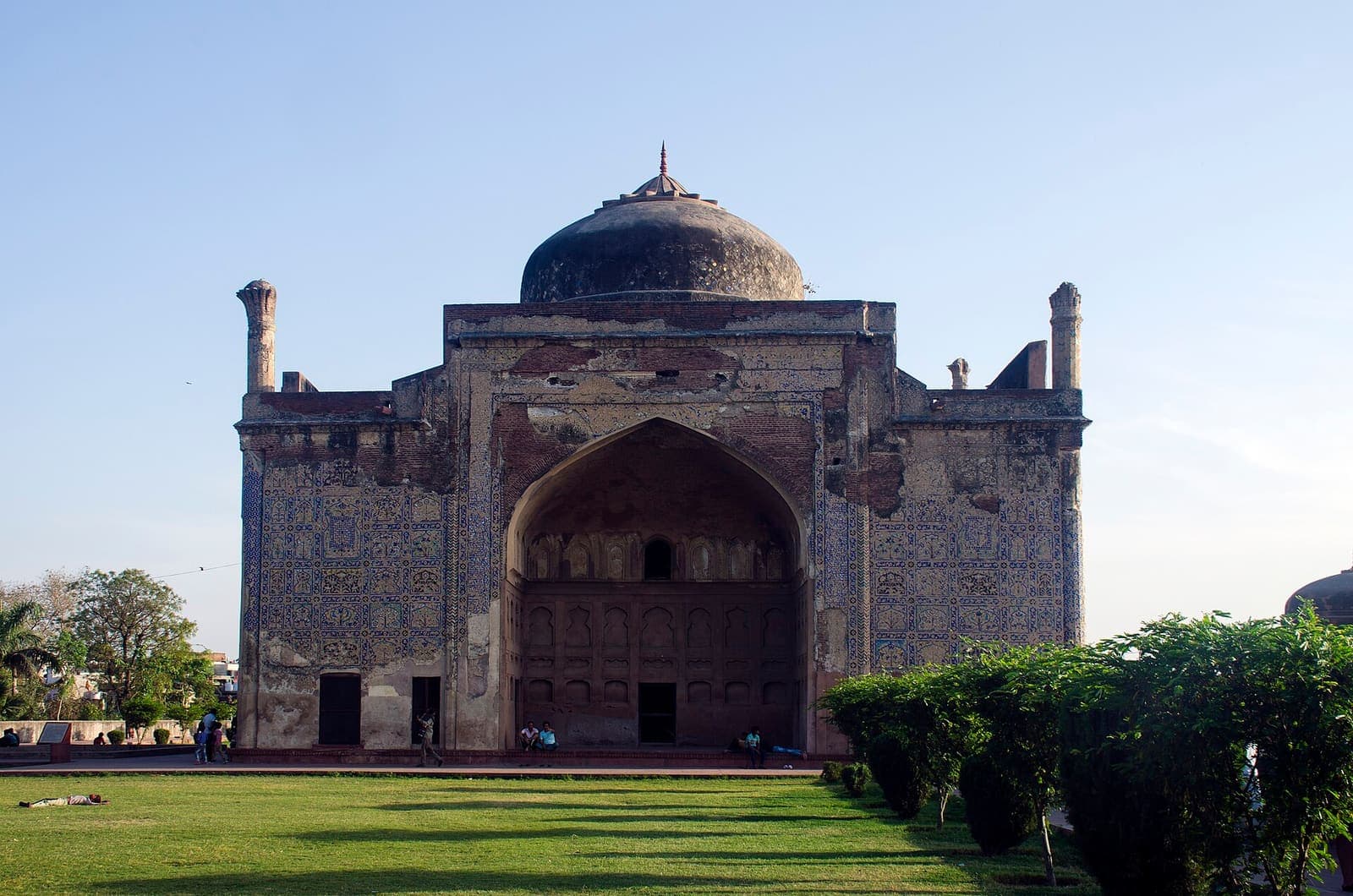
Photo: Rangan Datta · Wikimedia Commons · CC BY-SA 4.0 · resized for web
9. Ram Bagh: Babur’s riverside garden
Ram Bagh, further north along the same riverside road, is the garden Babur, the first Mughal emperor, is believed to have laid out around 1528, and it is regarded as the oldest surviving Mughal garden in India. Babur is said to have been buried here for a time before his body went to Kabul, and Nur Jahan later renovated it. With its terraced walks, water channels and pavilions over the Yamuna, it is an early model of the four-part garden later laid out at the Taj.
- Open: every day from sunrise to sunset.
- Ticket: ₹25 / ₹300.
- Allow: 30 to 45 minutes.
- Best time: morning, for the shade on the walks.
- Go with: Chini ka Rauza and Itimad-ud-Daulah, on the same bank.
10. Guru ka Taal: a gurdwara and a free meal
Guru ka Taal is a Sikh gurdwara on the Delhi highway at Sikandra, close to Akbar’s tomb. It marks the place where Guru Tegh Bahadur, the ninth Sikh Guru, offered himself for arrest to the emperor Aurangzeb. The present building, begun in the 1970s, is known for its carved stone, and its kitchen serves langar, a free community meal, every day.
- Open: every day from early morning to night, and free.
- Etiquette: cover your head (scarves are available at the entrance) and leave your shoes at the deposit.
- Allow: 30 minutes, or an hour with the langar.
- Best time: any time; it is still open after the monuments close at sunset.
- Go with: Akbar’s tomb and Mariam-uz-Zamani’s tomb.
Places to visit in Agra in 1, 2 or 3 days
Agra’s sights fall into four groups, and a day works best inside one or two of them: the Taj, the Fort and the old city on the city side of the Yamuna; Itimad-ud-Daulah, Chini ka Rauza, Ram Bagh and Mehtab Bagh across the river; Sikandra on the Delhi road to the north-west; and Fatehpur Sikri, 37 km west.
| Time in Agra | Plan |
|---|---|
| One day | The Taj at opening, Agra Fort, lunch, Itimad-ud-Daulah, then Mehtab Bagh for sunset |
| Two days | Day one as above. Day two: Fatehpur Sikri from 7:00 AM, lunch on the way back, Akbar’s tomb in the late afternoon |
| Three days | Day one: the Taj, Agra Fort, the Jama Masjid and Kinari Bazaar, and the fort’s show after dark. Day two: Fatehpur Sikri, Akbar’s tomb and Guru ka Taal. Day three: Ram Bagh, Chini ka Rauza and Itimad-ud-Daulah in the afternoon, Mehtab Bagh at sunset |
| A Friday | The Taj is shut, so do Agra Fort and the far bank, and see the Taj from Mehtab Bagh at sunset |
The one-day plan, hour by hour and with the Delhi trains, is in One day in Agra. Mind the season. In May the average afternoon high is about 42°C (IMD 1991 to 2020 normals), so keep the open-air sights for the first and last hours of daylight and rest in between; from November to February the highs average 22 to 29°C, and the day can run straight through.
Fridays and tickets: what to know before you go
The Taj Mahal is closed to visitors every Friday, and its night viewing does not run that day either. Every other place on this list is open, and Friday is the cheapest day at Agra Fort, Fatehpur Sikri, Itimad-ud-Daulah and Akbar’s tomb, because the Agra Development Authority does not collect its toll. Agra on a Friday turns that into a full day.
- Keep your Taj ticket. Shown the same day, it brings the foreign price down to ₹600 at Agra Fort and Fatehpur Sikri and ₹300 at Itimad-ud-Daulah and Akbar’s tomb, because the toll is already paid.
- Book online. Tickets for the ASI’s monuments are sold on the ASI booking site; at the Taj an online ticket is ₹5 cheaper for Indians and ₹50 for foreign visitors.
- Prices change. These are the October 2026 rates; check them on the day.
Where to eat between the sights
Eat in the part of the city where your morning ends, rather than crossing town for a name. After the Taj, the cafés of Taj Ganj and the hotel restaurants on Taj East Gate Road and Fatehabad Road are closest. Near the Fort, the old city is the place for street food, from bedai and jalebi at breakfast to chaat later in the day. Mehtab Bagh has no food stalls, so eat before you cross the river.
Coming back from Fatehpur Sikri or Sikandra, the west side of the city is on your way. Altitude Rooftop Lounge, the rooftop restaurant that publishes this journal, is on the top floor above MG Road 2, Jaipur House, about 16 minutes from Akbar’s tomb and 50 to 60 minutes from Fatehpur Sikri, and opens every day at 12:00 PM. Its English menu marks every dish veg, non-veg or egg, and it has 40 seats indoors in air conditioning and a lift to the top floor. If you are back before 7:00 PM and travelling on a foreign passport, all drinks there are buy one, get one free, dine-in only. For every other part of the city, lunch in Agra sets out the options and what they cost.
Things to do in Agra in the evening
The monuments close at sunset, but the evening has plenty in it.
- Rang-e-Agra at Agra Fort. A sound-and-light show on Agra through the ages, about 45 minutes long, every day in Hindi at 6:30 PM and in English at 7:30 PM. UP Tourism lists adult tickets at ₹300 (Indian) or ₹800 (foreign), online or at the fort; in July 2026 Agra’s divisional commissioner ordered the Indian ticket cut to ₹100, so check the price and the time at the fort. The Agra Fort guide has the details.
- The Taj by moonlight. Night viewing runs on the full-moon night and two nights either side, never on a Friday or in Ramzan, in half-hour batches of up to 50 people between 8:00 PM and midnight. Adults pay ₹510 (Indian) or ₹750 (foreign). The official page tells you to report to Shilpgram, near the East Gate, 30 minutes early with photo ID; Shilpgram has been a building site since its car park closed at the end of May 2026, so confirm the reporting point when you book. The night viewing guide has the dates.
- Dinner on a roof. Altitude is open until 12:30 AM, about 25 minutes from the Taj. The kitchen is on the roof, with a tandoor and a pizza oven, and North Indian and Mughlai sit beside Chinese, Continental and Italian. There is a bar. There is no Taj view, and by then you will have seen the Taj. Booking a table is free, and so is cancelling up to two hours before; tell the driver “MG Road 2, Jaipur House”, where a Domino’s is at street level.
- A night out. Cheers & Beers, a 21+ restropub with its own kitchen, a DJ and a dance floor, is on the second floor of the same building, Jaipur House, MG Road 2. It opened on 31 October 2026; see its website for the hours and the entry rules. BYOB there means buying your own bottle inside; outside bottles are not allowed.