Top 10 street foods in Agra, and where to eat each one
Ten dishes in the order we would make a friend eat them, from the bedai that is gone by mid-morning to the gajak that waits for winter — with the shops we would send them to.
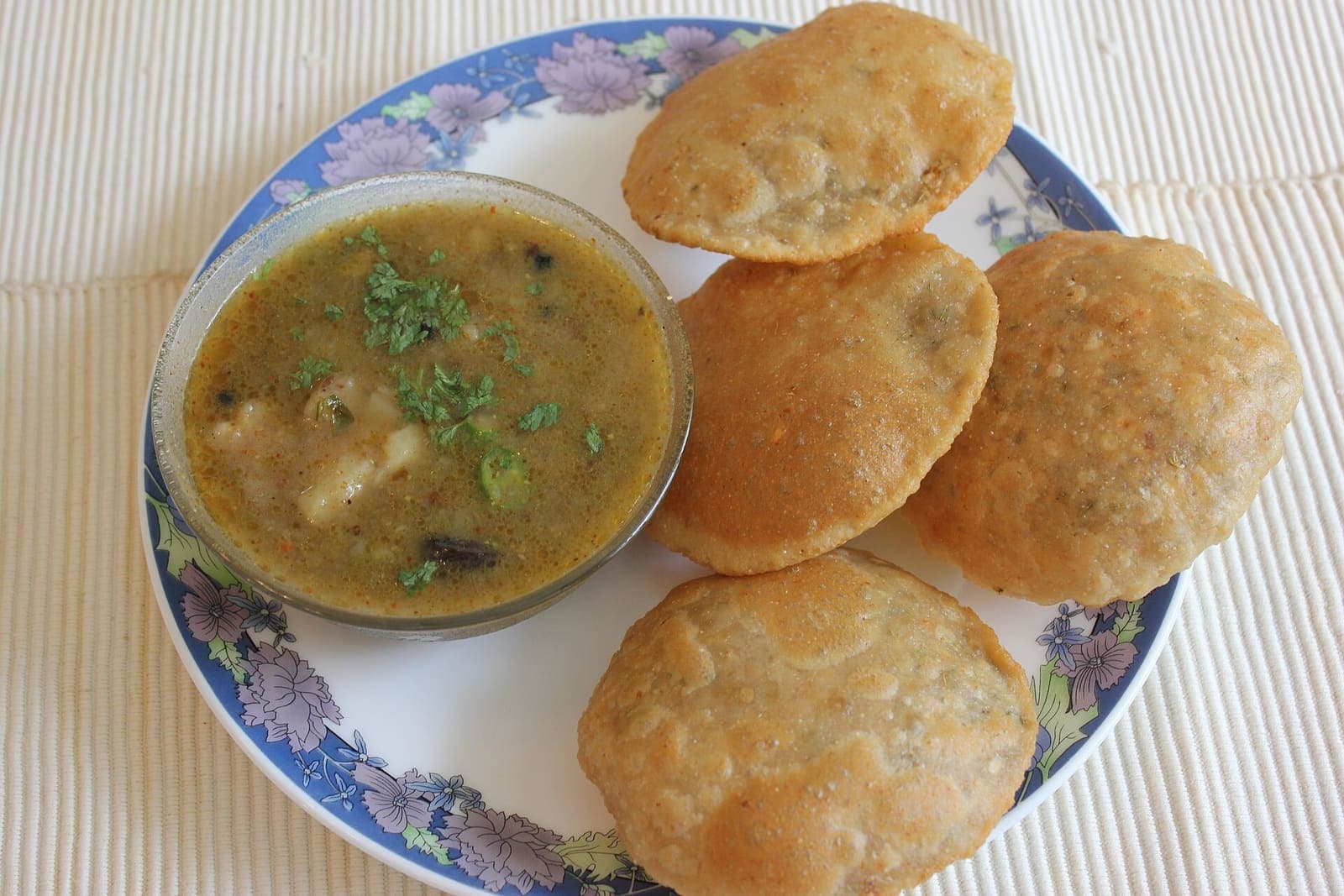
Photo: Ravi Talwar · Wikimedia Commons · CC BY-SA 4.0
The ten things to eat in Agra, in our order: bedai with aloo sabzi, petha, jalebi, dalmoth, bhalla, a stuffed paratha, paani ke batashe, papri chaat, seekh kebabs and, in winter only, gajak. Below is what each one is, the time of day it belongs to, one or two places to eat it, and the one thing worth knowing before you go.
A word on who is writing. This is the journal of Altitude, the rooftop restaurant above MG Road 2, and Altitude is ours. It is not street food and it is not on this list; every shop named below is one we would send a friend to. The longer story, with the city’s eating clock and where its Mughlai cooking comes from, is in our guide to Agra’s street food. This page is the shortlist.
How we chose and ranked them
We ranked dishes, not shops. The order is a rough measure of how much of Agra is in each one: the dishes you would struggle to eat properly anywhere else come first, and the ones all of North India does well come lower, however good the Agra version. For each we name one or two well-known places, all of them trading when we checked in October 2026.
Prices appear only where a shop publishes them, which in practice means the boxed sweets and namkeen. Street plates cost little and change too often to print, so carry small notes. Hours and prices are as listed on 6 October 2026; check before you go.
1. Bedai with aloo sabzi — the breakfast
Bedai is a puffed, deep-fried bread with a spiced lentil filling, served with a thin potato sabzi that has some heat in it. It is the city’s breakfast and a morning-only dish, fried in batches from early and finished well before lunch. It tops the list because nothing else is so particular to Agra and so easy to miss: it is made at exactly the hour a visitor is likely to be at the Taj.
Where: Deviram Sweets on MG Road at Pratap Pura has a street-level counter for bedai and kachori, with its sweet shop upstairs. Bhagat Halwai in Nehru Nagar, Civil Lines, which dates itself to 1795, serves bedai, kachori and jalebi as well.
Tip: there is no seating at the Pratap Pura counter, and people eat standing or in the car. Go before 10:00 AM and do the same.
2. Petha — the sweet Agra is known for
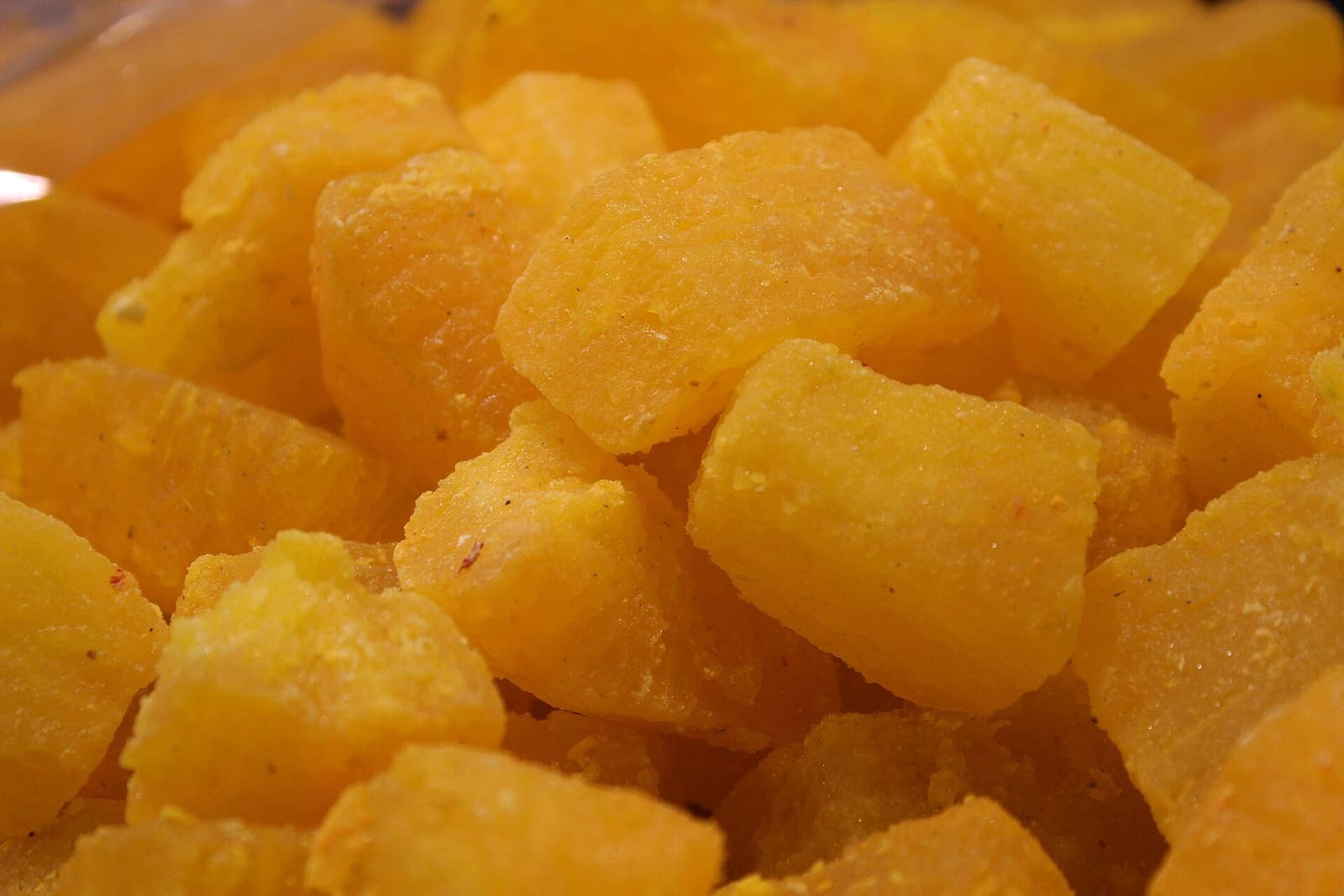
Photo: PJ.wikilovesfood · Wikimedia Commons · CC BY-SA 4.0
Petha is ash gourd, a big, watery vegetable, cured in lime water, boiled and soaked in sugar syrup until it turns translucent, firm outside and soft within. Plain dry petha is the classic; angoori, kesar and paan petha are the common variations. The story that it was invented in Shah Jahan’s kitchens is popular and unproven.
Where: you will see the name Panchhi on a great many shop signs. The original firm, founded by Pancham Lal Goyal, whose nickname was Panchhi, has its headquarters on Noori Gate Road and lists its shops on its website, in Sadar Bazaar, on Fatehabad Road and near the Taj’s East Gate among them. Bhimsain Baijnath, another old Agra name, sells the same range. On the two firms’ websites a 400 g box of plain dry petha costs ₹220 to ₹235; angoori and kesar cost a little more.
Tip: if it matters which Panchhi you buy from, check the shop against the firm’s store list first.
3. Jalebi — fresh, with the bedai
Jalebi is fermented batter piped in spirals into hot oil, then dropped into sugar syrup. It is sold all over India, so it is here for what Agra does with it: at breakfast it goes on the same table as the bedai, and its sweetness is there to meet the spice of the sabzi.
Where: the bedai counters fry it through the morning. Deviram Sweets at Pratap Pura sells it by the plate alongside the bedai, so there is no need to buy a kilo to try it, and Bhagat Halwai in Nehru Nagar fries it too.
Tip: if a fresh batch is about to come out of the syrup, wait for it. A jalebi a few minutes old is crisp; one that has sat for an hour has gone soft and sticky, and it is a different and lesser sweet.
4. Dalmoth — the namkeen that goes home with you
Dalmoth is Agra’s own namkeen: fried lentils with nuts, and often raisins, in a dry spice mix. In the city it is a tea-time snack. Visitors take it home because it is light and dry, and it travels far better than anything sitting in syrup.
Where: Bhimsain Baijnath, which dates itself to 1865 and opened its first shop in Kinari Bazaar, lists its store at the Hari Parvat crossing on MG Road. Panchhi and Bhagat Halwai sell their own. On the websites, 500 g of plain dalmoth costs ₹380 (Panchhi) to ₹595 (Bhimsain Baijnath’s, made with ghee); the cashew versions cost more.
Tip: judge a shop by its plain dalmoth. The cashew and dry-fruit versions are good, but we would save those for presents.
5. Bhalla — Agra’s aloo tikki
Ask for a bhalla in Agra and you get a fat potato patty, shallow-fried on a big iron griddle until the outside cracks, broken open on the plate and finished with curd and chutneys. Elsewhere in the north it would be called a dahi aloo tikki. It is an afternoon and evening dish, and Sadar Bazaar is the place for it.
Where: the Chaat Gali in Sadar Bazaar, a lane given over to chaat counters. Agra Chat House, near the lane’s entrance, opens at 1:00 PM and is known for its tikki.
Tip: say how hot you want it before the chutneys go on. A bhalla can be made milder at the counter, but not once it is on your plate.
6. Stuffed paratha — a meal on one plate
A paratha stuffed with spiced potato, paneer or mixed vegetables, or with the less usual sev and papad, then fried in ghee on a wide tawa. It arrives with aloo sabzi and another curry or two, chutney and pickle, which makes one paratha a full meal for most people.
Where: Ram Babu Paratha Bhandar at 6/127 Belanganj. Its listing gives 10:30 AM to 10:30 PM, which makes it a late breakfast or a lunch rather than an early start. There is a sweet shakkar paratha, filled with sugar, for anyone who wants pudding.
Tip: order one each, and a second to share only if you are still hungry. They are richer than they look.
7. Paani ke batashe — gol gappe, Agra style
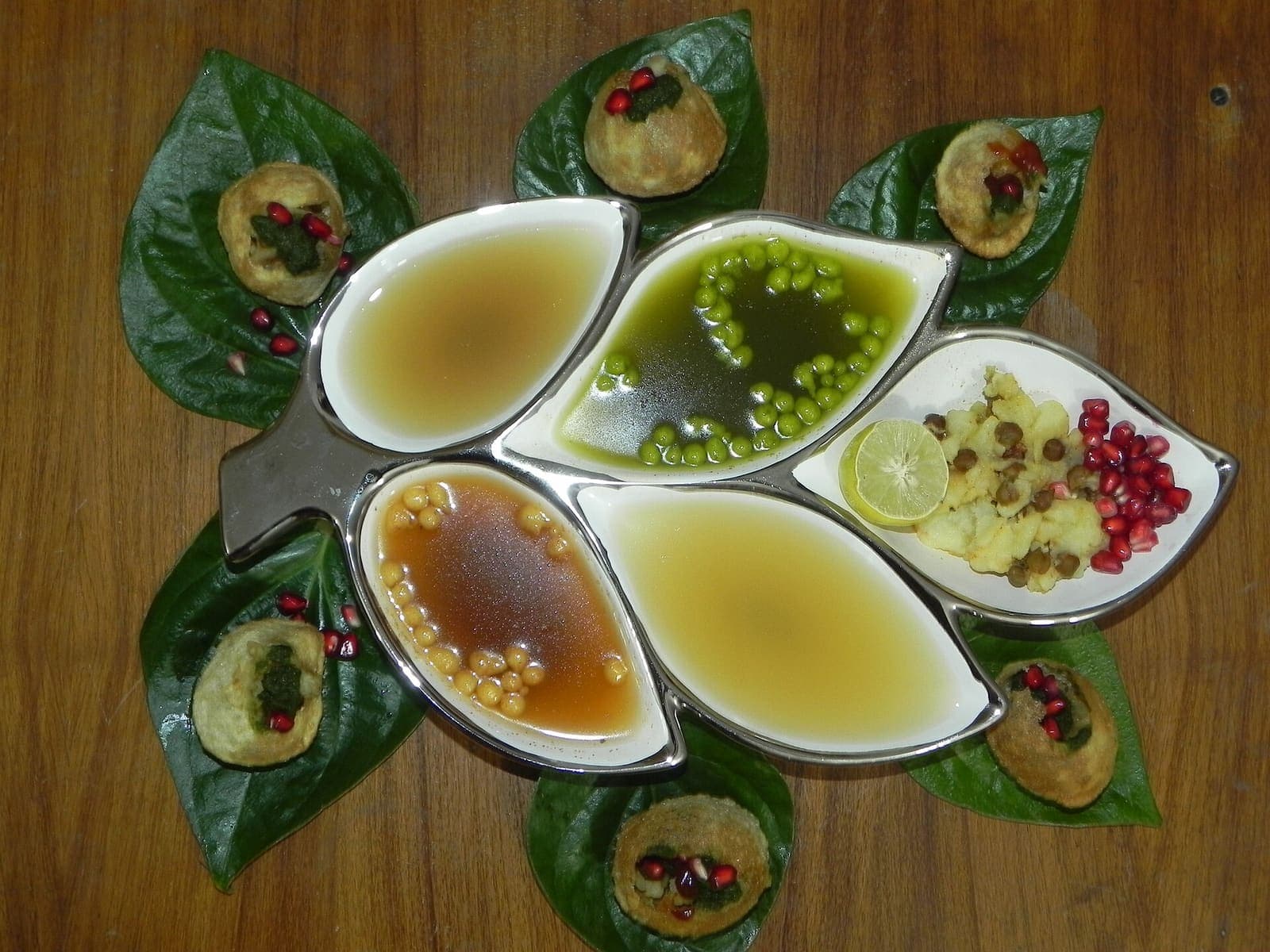
Photo: Anshulavohra · Wikimedia Commons · CC BY-SA 4.0
Small hollow puris, cracked open, filled with potato or chickpeas and dipped in spiced, sour water. Most of India calls them gol gappe or pani puri; in Agra you will hear paani ke batashe. Each one goes in whole, the moment it is handed to you.
Where: Agra Chat House and the other counters of Sadar Bazaar’s Chaat Gali, in the evening. Bhagat Halwai in Nehru Nagar serves them too.
Tip: this is the one dish on the list where the water matters more than anything fried, so eat it at a busy shop with a quick turnover rather than at a cart you know nothing about.
8. Papri chaat — the evening plate
Crisp fried wafers broken onto a plate with potato and chickpeas, then layered with curd, sweet tamarind and green chutneys, sev and coriander. Every plate is put together to order, and in Agra it is evening food: the counters are at their busiest after dark.
Where: Sadar Bazaar’s Chaat Gali again, where the same counters do raj kachori, a large crisp shell filled and piled with much the same toppings. Agra Chat House’s papri chaat is a fair place to start.
Tip: eat it straight away. The wafers start to soften under the curd within a couple of minutes, and a soggy papri chaat is a lesser dish.
9. Seekh kebab — the Mughlai grill
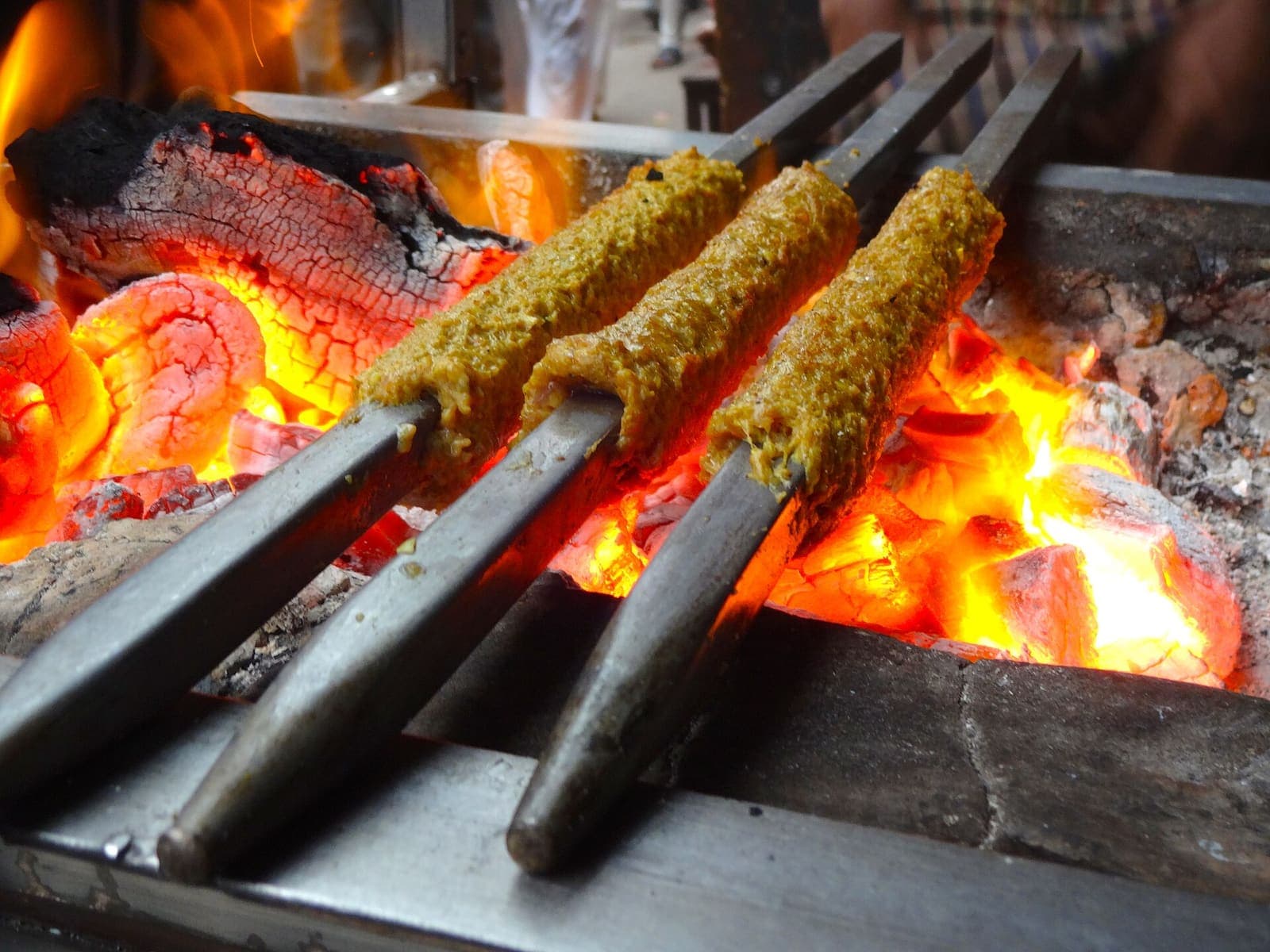
Photo: Sumitmalhotra · Wikimedia Commons · CC BY-SA 4.0
Spiced minced meat pressed onto long skewers and cooked over charcoal, eaten with sliced onion, green chutney and bread. Agra was a Mughal capital and its kitchens still show it; the grill is the quickest way in. It is also the only meat on this list.
Where: Mama Chicken Mama Franky House on Sadar Bazaar Road, known for seekh and galouti kebabs, tandoori chicken and the chicken frankies in its name. Its listing gives noon to midnight, which is late by local standards and worth knowing, because Agra closes early.
Tip: if someone in your group is vegetarian, the chaat lane is in the same bazaar, so nobody has to choose.
10. Gajak — winter only
Gajak is sesame pounded with jaggery or sugar into thin, brittle layers; the long hammering is what makes it flake. It is a cold-weather sweet, which is one reason it comes last: it arrives on the halwai counters from about November and stays for the winter. Revdi, small sesame drops, comes with it.
Where: Bhimsain Baijnath and Panchhi both sell it, in gud (jaggery) and chini (sugar) versions. On their websites 500 g costs ₹430 to ₹550, and the same weight of revdi about ₹350.
Tip: if you are buying one box, buy the gud. It is darker and less one-note than the sugar kind.
The ten, at a glance
| Dish | When, and where to start |
|---|---|
| 1. Bedai with aloo sabzi | Breakfast, before 10:00 AM. Deviram Sweets, Pratap Pura; Bhagat Halwai, Nehru Nagar |
| 2. Petha | Any time. Panchhi (headquarters on Noori Gate Road); Bhimsain Baijnath |
| 3. Jalebi | Breakfast, with the bedai. The same two counters |
| 4. Dalmoth | Any time, to take home. Bhimsain Baijnath, Hari Parvat; Panchhi; Bhagat Halwai |
| 5. Bhalla | Afternoon and evening. Chaat Gali, Sadar Bazaar |
| 6. Stuffed paratha | Late breakfast or lunch. Ram Babu Paratha Bhandar, Belanganj |
| 7. Paani ke batashe | Evening. Chaat Gali, Sadar Bazaar; Bhagat Halwai |
| 8. Papri chaat | Evening. Chaat Gali, Sadar Bazaar |
| 9. Seekh kebab | Evening. Mama Chicken Mama Franky House, Sadar Bazaar |
| 10. Gajak | Winter only. Bhimsain Baijnath; Panchhi |
Eating street food safely
None of this needs to be approached nervously, but a visitor’s stomach is meeting it for the first time, and three habits go a long way.
- Eat it hot. Choose food cooked in front of you and handed straight over: bedai, jalebi, bhalla and kebabs all come straight off the heat.
- Pick the busy counter. It turns over its oil and its batches quickly.
- Drink sealed water. Bottled, with the seal intact. Go easy on ice, and save paani ke batashe for a busy shop.
If something is wrong, India’s food regulator, FSSAI, runs a toll-free line, 1800 11 2100 (7:00 AM to 11:00 PM), and takes complaints through its Food Safety Connect app.
When you want a chair
Nothing on this list needs a restaurant, which is rather the point of it. But most trips have an evening when you want the same flavours sitting down: after a long day at the monuments, or with someone who would rather not eat standing in a bazaar.
That is where we come in, and since Altitude is our own restaurant, weigh the suggestion accordingly. We are on the top floor above MG Road 2 in Shahganj, with the kitchen on the roof beside you: tandoor, wok and pizza oven. Of its 225 dishes, ₹20 to ₹830, the Mughlai and North Indian ones are the sit-down side of this list. Open every day from 1:00 PM; last kitchen order 11:00 PM.
Booking a table is free and confirmed instantly, with free cancellation up to two hours before. Or order from the same kitchen to your hotel. And if it is coffee and a quiet corner you want rather than dinner, start with our ten cafés in Agra.