Shopping in Agra: the old city’s markets, marble inlay, petha and how to buy well
Agra’s shopping is marble inlay, petha, leather shoes, rugs and wedding trim. Here is what each market is good for, a walk through the old city from the Jama Masjid, how to check inlay before you pay, and how to buy without a middleman.
By Priyanka Singh, Travel expert
 (opens in a new tab)
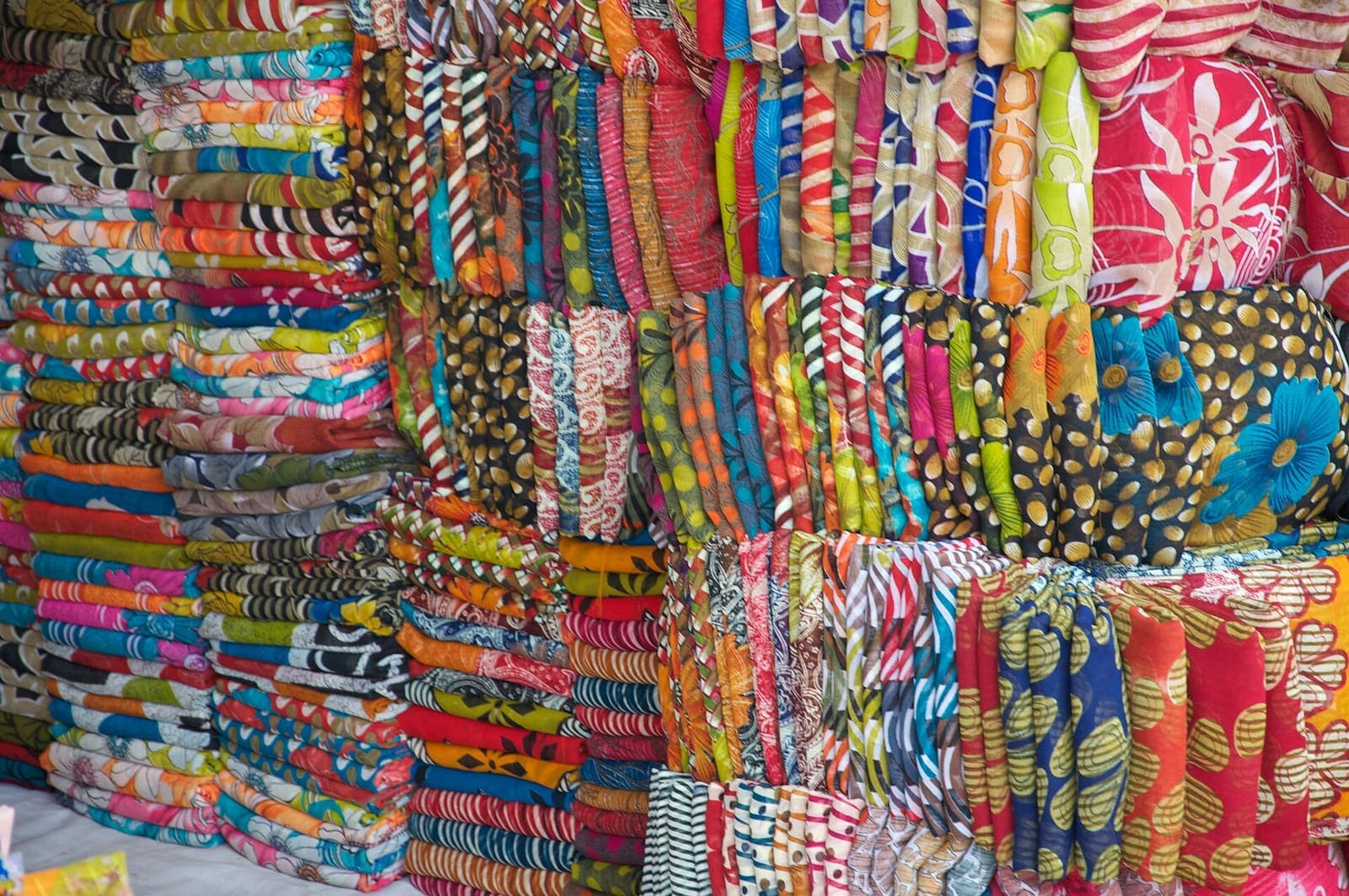
Photo: Jon Connell · Wikimedia Commons · CC BY 2.0 · resized for web
Shopping in Agra is about marble inlay, petha, leather shoes, durries and zari embroidery. Sadar Bazaar is the easy evening market for leather and street food; Kinari Bazaar and the lanes round the Jama Masjid are the old city at full pitch. Choose shops yourself, compare prices, and never let a driver choose them for you.
| What you want to know | The short answer |
|---|---|
| What Agra is known for | Marble inlay (pietra dura), petha and dalmoth, leather shoes, durries and carpets, zari and zardozi |
| Leather and an easy evening | Sadar Bazaar, in the Cantonment near Agra Cantt station |
| The old city | Kinari Bazaar and the lanes behind the Jama Masjid, next to Agra Fort |
| Shoes | Hing ki Mandi, the city’s shoe market, in the old city |
| Silk and saris | Subhash Bazaar, in the old city |
| Petha | ₹235 for 400 g of plain dry petha on the Panchhi firm’s website |
| Shop hours | Late morning to about 9:00 PM; each market has its own weekly closing day |
| Official recognition | Agra Stone Inlay Craft, a registered Geographical Indication since 27 March 2025 |
| Bargaining | Normal in the bazaars; not over a printed MRP |
| Commission | Drivers and guides may be paid by the shops they bring you to: go on your own |
What to buy when shopping in Agra
Agra is known for five things worth carrying home: inlaid marble, petha, leather shoes, flat-woven rugs and metal-thread embroidery. Agra Smart City, the city’s own smart-city company, puts stone inlay and carving, shoes and leather, sweets and namkeen, zari and zardosi, carpets and jewellery on its list of what to buy.
- Marble inlay. White marble set with cut semi-precious stones, the craft on the Taj Mahal’s walls, known in Agra as parchinkari or pachhikari. It is sold as boxes, coasters, plates and table tops, and “Agra Stone Inlay Craft” has been a registered Geographical Indication since 27 March 2025, according to India’s GI registry.
- Petha and dalmoth. Petha is candied ash gourd, the sweet the city is famous for; dalmoth is its spiced lentil namkeen. Boxed, they are the easiest present to carry.
- Leather shoes. Agra Smart City calls the city India’s biggest leather-footwear manufacturing hub. Sadar Bazaar is known for leather, and Hing ki Mandi is the shoe market.
- Durries and carpets. The Agra durrie, a flat-woven rug with no pile, has been a registered Geographical Indication since 30 March 2013, and the city also makes hand-knotted carpets in wool, cotton and silk.
- Zari and zardozi. Embroidery in metal thread, which reached India from Persia under the Mughals. It is popular for bridal wear and also turns up on cushions, bags and shoes.
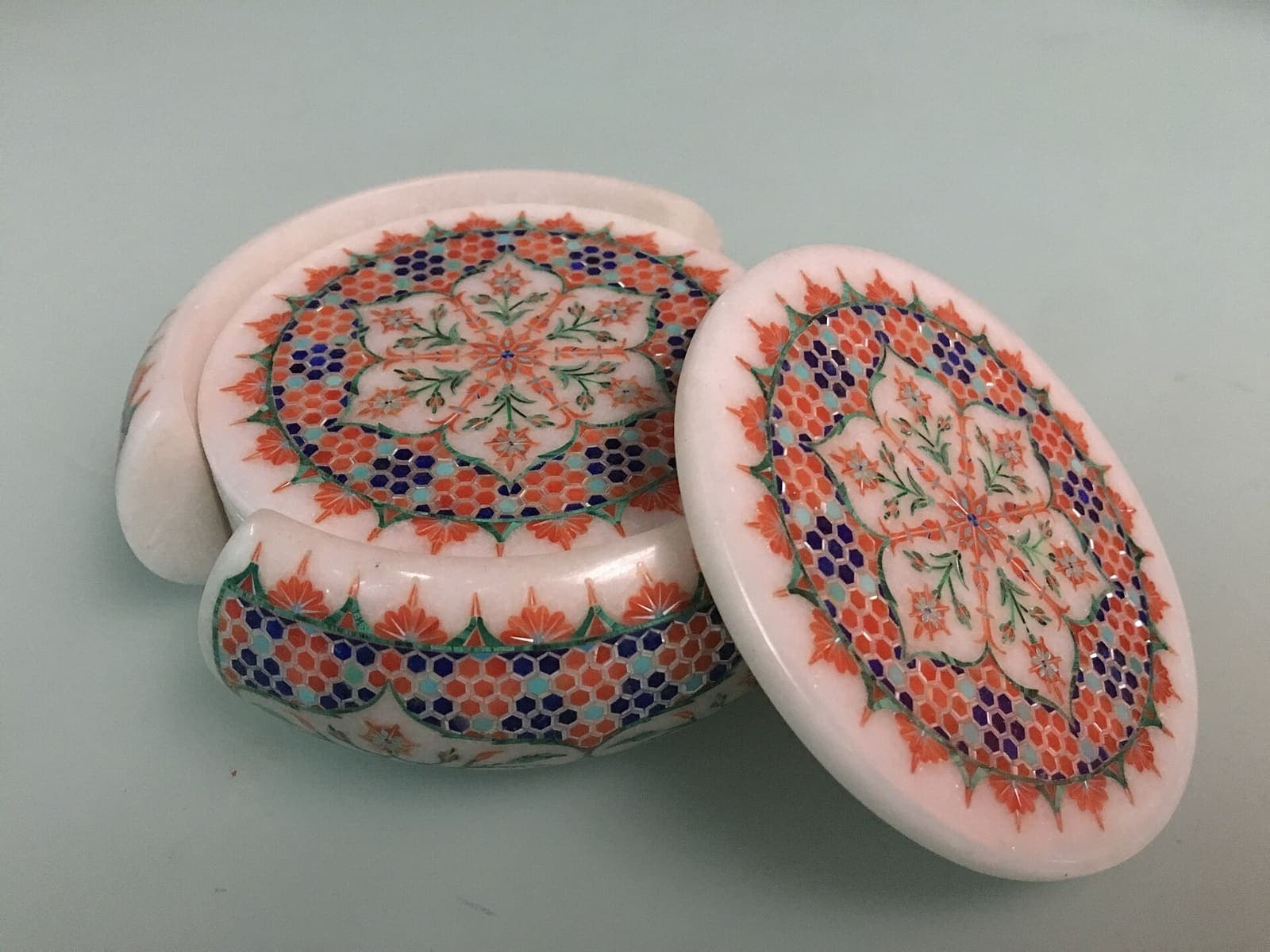
Photo: William Tunstall-Pedoe · Wikimedia Commons · CC BY-SA 4.0 · resized for web
Brassware, jewellery and carved soapstone are widely sold too. Soapstone is a craft in its own right; the trouble starts only when it is passed off as marble.
Agra market guide: which bazaar is good for what
Go to Sadar Bazaar for leather and an easy evening, Kinari Bazaar for the old city, Hing ki Mandi for shoes and Subhash Bazaar for silk. Agra has no single shopping street: its main markets are in the Cantonment and in the old city round the Jama Masjid, with showrooms for visitors on the roads to the Taj. The descriptions below follow India’s tourism ministry and other guides.
| Market | Good for |
|---|---|
| Sadar Bazaar, Agra Cantonment | Leather goods and shoes, clothes, petha shops, and chaat in the evening |
| Kinari Bazaar, old city | Wedding clothes and trims, jewellery from trinkets to heavy silver, fabric, spices |
| Hing ki Mandi, old city | Shoes: it is the city’s shoe market |
| Subhash Bazaar, old city | Silk and saris, block-printed and embroidered fabric |
| Raja ki Mandi | Clothes and jewellery, handicrafts including marble inlay and brassware; chaat and lassi |
| The roads to the Taj | Marble souvenirs in showrooms and stalls; Shilpgram, the crafts complex by the East Gate, is being rebuilt as a crafts mall, due by December 2026 |
| Government emporia | Recommended by the tourism ministry for authenticity and better prices |
Sadar Bazaar, Agra: the easy one
Sadar Bazaar is in the Cantonment, close to Agra Cantt station, and it is the gentler introduction: broad streets, good lighting and room to walk, which makes it the place to start if you have one evening. India’s tourism ministry singles it out for leather, especially well-made shoes at fair prices. Come hungry: the Chaat Gali, Sadar’s street of chaat stalls, is at its busiest after dark.
A walk through old Agra: Jama Masjid, Kinari Bazaar and the lanes
The old city begins at the Jama Masjid, on the north-western side of Agra Fort, and its bazaars fill the narrow lanes behind it. Shah Jahan’s daughter Jahanara completed the mosque in 1648, in red sandstone picked out with white marble. In 1857 the British pulled down its eastern wing, and a railway line now runs between the mosque and the Fort’s Delhi Gate.
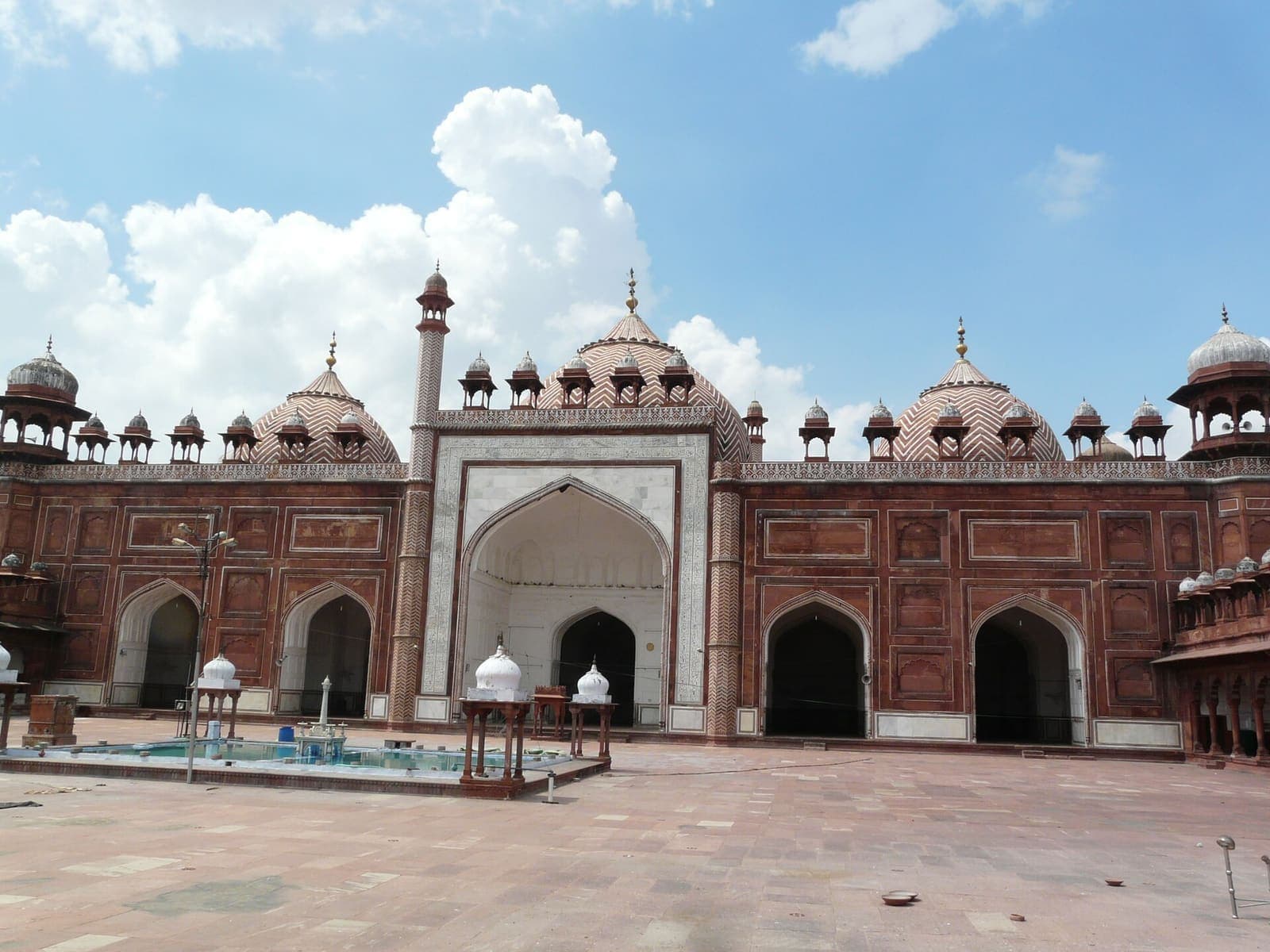
Photo: Varun Shiv Kapur · Wikimedia Commons · CC BY 2.0 · resized for web
The Jama Masjid is a working mosque, so dress modestly, leave your shoes at the entrance and keep away at prayer times, above all at the Friday midday prayer. Late afternoon is the time to come, when the heat has eased and the shops in the lanes are open. What to look for:
- Kinari Bazaar, for wedding clothes and kinari, the decorative borders sewn onto saris and bridal wear; also bangles, and jewellery from small trinkets to heavy silver necklaces, with fabric and spices in between.
- Subhash Bazaar, for silk and saris.
- Hing ki Mandi, for shoes.
- Chaat on the corners as the evening comes on. The guide to Agra’s street food explains what to order and when.
Leave the car behind. The first stretch of Agra Metro, open since 6 March 2024, runs from Taj East Gate to Mankameshwar, which connects with Agra Fort railway station between the Jama Masjid and the Fort, and our Agra Metro guide has the stations; otherwise take an app cab or an auto to the mosque and walk. Arriving on your own also means nobody else picks the shops. The Fort is next door, and the Agra Fort guide has its timings and tickets.
Agra petha: where to buy it, and which kind to pack
Buy petha from an established sweet shop, and pack the plain dry kind. Petha is ash gourd soaked in lime water, boiled until it turns translucent and finished in sugar syrup. Plain dry petha is the classic; angoori petha comes in small pieces in syrup, and kesar, paan and chocolate versions fill the rest of the counter. Agra tells more than one story of how it began, one set while the Taj was being built and another involving the empress Nur Jahan, and none of them can be proved.
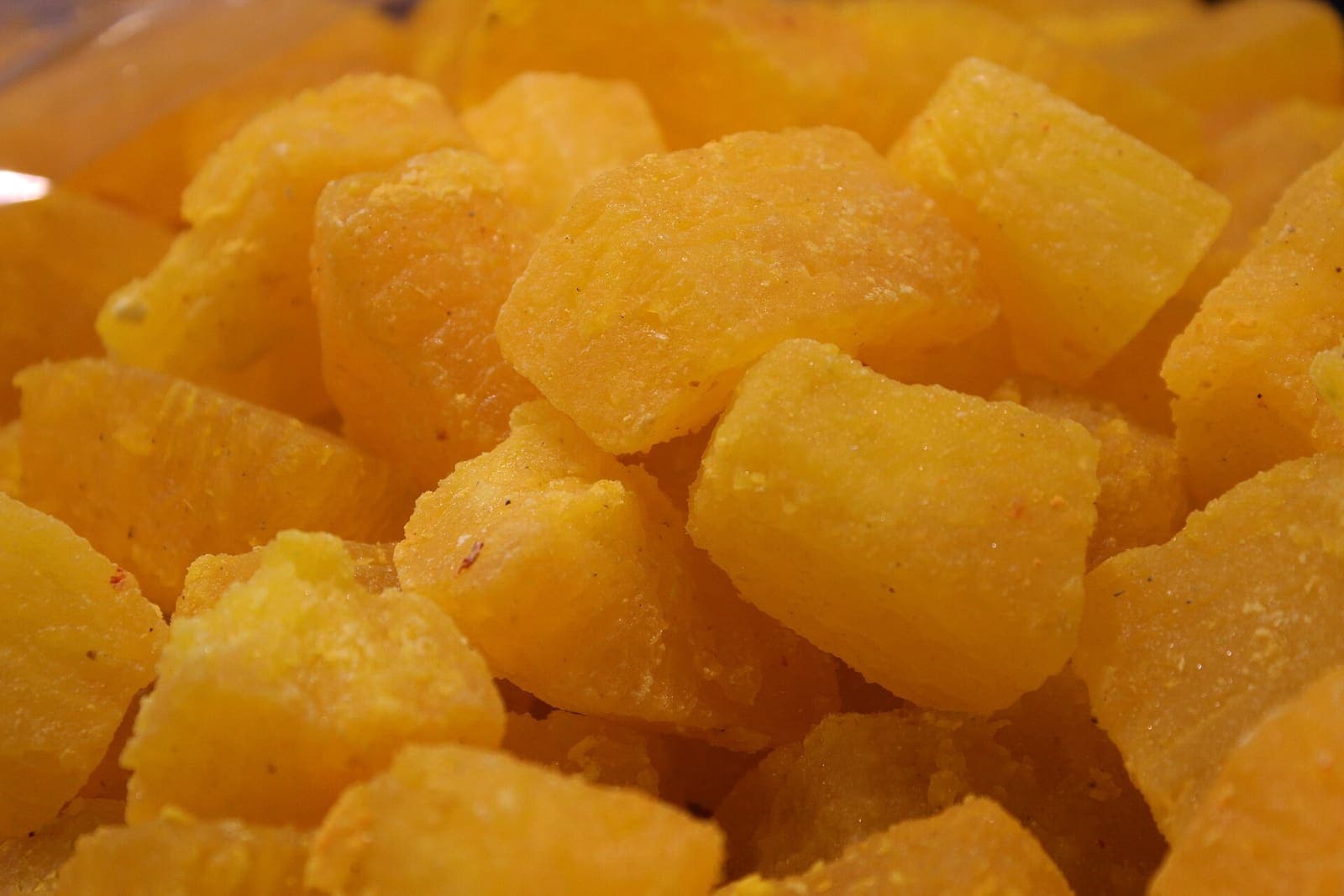
Photo: PJ.wikilovesfood · Wikimedia Commons · CC BY-SA 4.0 · resized for web
Many visitors come looking for Panchhi, often written Panchi. The firm traces itself to 1926, when Pancham Lal Goyal, nicknamed Panchhi, opened his first shop at Noori Gate. Its website lists its own shops, in Sadar Bazaar, on Fatehabad Road and by the Taj’s East Gate, with the headquarters on Noori Gate Road. If the original firm matters to you, check a shop against that store list before you buy.
On the firm’s website on 22 October 2026, 400 g of plain dry petha cost ₹235, 400 g of angoori petha ₹260 and 500 g of plain dalmoth ₹380, tax included. The list of Agra’s top street foods names more of the city’s sweet shops, and where to buy dalmoth.
- For a long journey, take plain dry petha. It has no syrup to leak, and its sugar is what preserves it. Leave angoori and the other syrupy kinds for eating in Agra.
- Dalmoth packs just as easily: it is dry, light and spiced.
- No GI tag, yet. Agra petha is not a registered Geographical Indication: an application filed on 27 October 2023 was still under examination on 22 October 2026, and an earlier one from 2010 was abandoned.
How to spot real marble inlay (pietra dura)
Real marble inlay is made of separately cut pieces of stone set into shapes carved out of the marble, so the surface is smooth, the joins are tight and each flower is built from several pieces. Outlook Traveller puts the mark of fine work well: the stone should look as if it grew out of the marble.
The crafts organisation Dastkari Haat Samiti has recorded how Agra’s workshops do it, step by step:
- The design is drawn on paper, and its outline is transferred to the marble in pencil or charcoal.
- The stones, which arrive as plates and shards, are cut into tiny pieces by hand on a turning wheel.
- The pieces are laid out on the marble, which has been coloured with red earth or a washable dye, and their outline is engraved round them with a diamond-tipped stylus.
- The pieces come off, and the outlined shapes are carved a couple of millimetres deep with a diamond-tipped chisel.
- The pieces go back in adhesive, flush with the surface: once a family’s own natural mixture, today usually a chemical adhesive mixed with white cement.
- The piece is buffed smooth, which also washes off the colour.
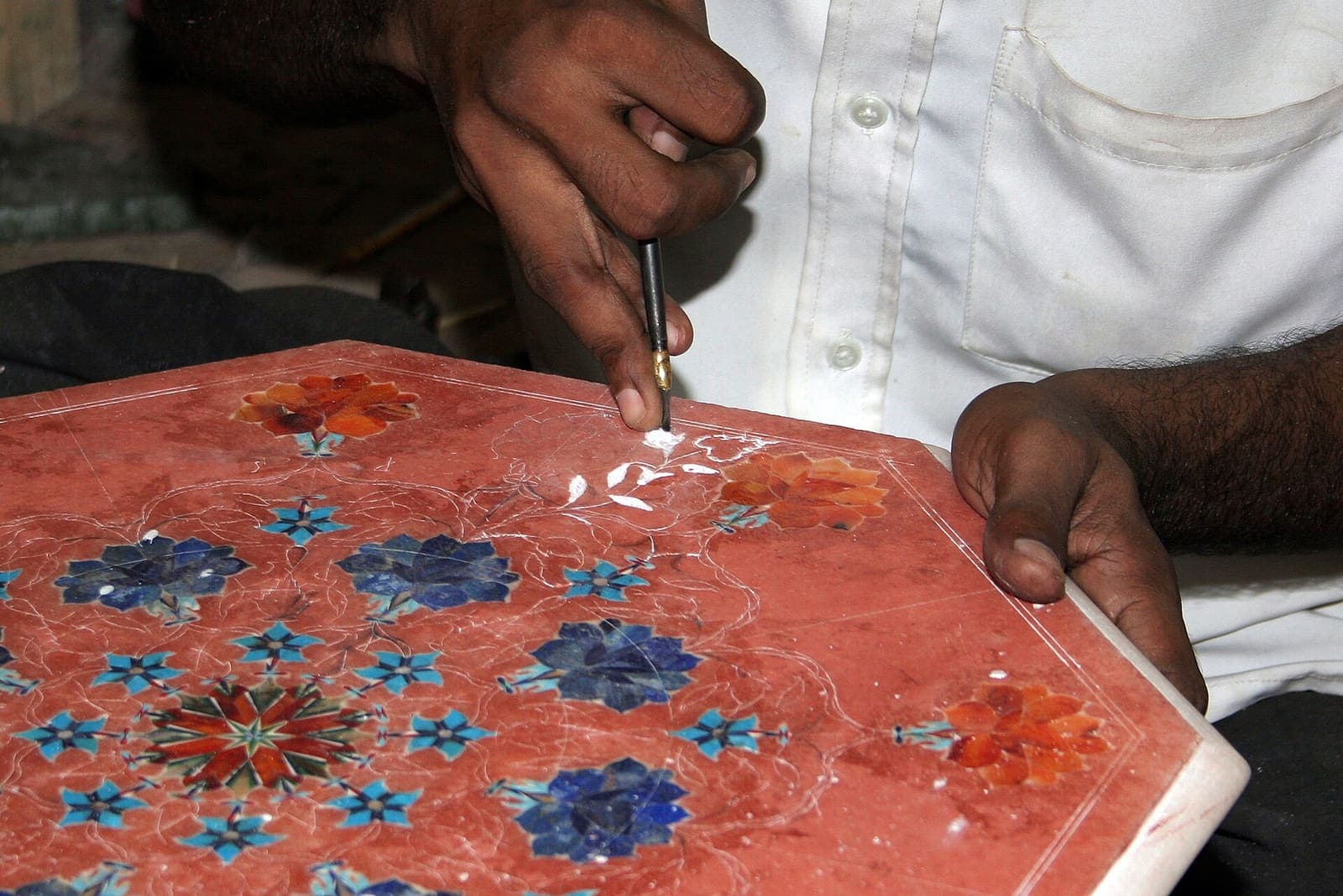
Photo: David Castor · Wikimedia Commons · Public domain · resized for web
Four checks before you pay:
- Run a fingertip across it. Real inlay is flush, with no ridge, no dip and no visible gap round the stones.
- Look closely at one flower. Its petals and leaves should be separate pieces of stone, with fine joins between them. A painted or printed pattern has no joins at all.
- Make sure the base is marble. Soapstone, which is mostly talc, feels greasy, and on Britannica’s hardness scale a fingernail scratches talc very easily. Marble, mostly calcite, will not take a fingernail scratch. Ask before you test, and try the underside.
- Get it in writing. Ask for a bill that names the material, the stones and the size, with the shop’s name and address. A shop selling the real thing has no reason to refuse.
Look at the original before you buy a copy. The Taj Mahal, Agra Fort and Itimad-ud-Daulah all carry Mughal inlay, and the guide to what you see inside the Taj Mahal shows where to look. This guide prints no inlay prices, because they turn on the size, the stones and the number of pieces; compare two or three shops instead.
How to bargain in Agra’s markets
Bargain in the bazaars, never over a printed price. Outlook Traveller warns that visitors are often quoted inflated prices for souvenirs and clothes, and its advice is the usual: know what things cost, compare a few shops and negotiate.
- Ask two or three shops first. The same box or pair of shoes is usually on more than one counter, and the second price tells you a lot about the first.
- A big discount is not a fair price. In a case reported by ETV Bharat in January 2023, a visitor brought to an Agra emporium by a guide was quoted ₹80,000 for a marble box and a chess set, “bargained” down to ₹37,500 and paid by card for goods the report put at ₹4,900. Police arrested the shop owner, a salesman and the guide.
- Do not haggle over an MRP. Boxed sweets and other packaged goods carry a printed maximum retail price, tax included.
- Government emporia. The Incredible India site recommends them “for authenticity and better prices” and lists four in Agra, among them U.P. Handloom on M.G. Road and the Khadi Bhavan at Raja ki Mandi. Check that one is open before you go.
- Pay by card where you can, and keep the card in sight: the UK’s travel advice says card skimming is common in India. Our guide to paying in Agra as a foreign visitor covers cards, cash and UPI.
Commission shops: how to avoid them
Choose your shops yourself and get there on your own. Outlook Traveller warns that drivers and guides may take visitors to shops where they receive a commission, and the 2023 case above began exactly that way, with a guide and an emporium after a visit to the Taj.
- Plan the shops before you set off, and tell the driver where you are going, not what you want to buy.
- Say no to stops you did not ask for, however helpful the offer sounds.
- Take the metro or an app cab to the old city, so nobody else chooses the door you walk through.
- Know what the Taj does not have. The district administration’s website says there is no official souvenir or handicraft shop inside the Taj Mahal, so a shop presented as the Taj’s own is making a sales pitch.
- Refuse export deals. Canada’s travel advice warns of scams over exporting jewels, gemstones and carpets, with taxi drivers offering visitors money to take part, and says to accept no such offer, however convincing.
If something does go wrong, go to the police: in the 2023 case they made the arrests on the visitor’s complaint. India’s emergency number is 112.
Shipping your shopping home
Carry what you can, and ship only with everything in writing. A box or a set of coasters travels well wrapped in clothes in your suitcase; a table top or a large carpet needs shipping, and many Agra shops offer it.
- Get a written invoice listing each item with its material, stones, size and price, plus the shipping charge, the carrier, the insurance and the delivery date, and the shop’s full name, address and phone number.
- Photograph the piece you chose, and watch it being packed if you can.
- Pay by card and keep the receipt. If a parcel never arrives, your card issuer is the first call.
- Be wary of “we will send it” at a shop you did not choose. The visitor in the 2023 case paid by card and was told the goods would be delivered to her.
- Check your own country’s rules on food before you pack petha and dalmoth: some countries ask arriving travellers to declare all food.
- Be careful with anything sold as an antique. India strictly controls the export of antiquities, and Canada’s travel advice says antique items must be registered with the local police, with a photograph of each, before they leave the country. If a shop calls a piece antique, ask for the paperwork, or buy new work instead.
When are Agra’s markets open?
Most shops open in the late morning, around 10:00 or 11:00 AM, and start closing at about 9:00 PM, so late afternoon into early evening is the time to go. Each market keeps its own weekly closing day, and the lists published online contradict each other, so ask your hotel the evening before rather than trusting any one of them.
Plan around two more things. The Taj Mahal is closed every Friday, which makes Friday a natural day for the old city, but the Friday midday prayer is the Jama Masjid’s busiest hour; the guide to Agra on a Friday builds the day around both. And Taj Mahotsav, usually in the second half of February, brings in craftspeople from all over India. It has long been held at Shilpgram, near the Taj’s East Gate, but Shilpgram was pulled down in July 2026 to build a new crafts mall, so check the 2027 venue before you plan around it; the Taj Mahotsav guide has what is known about the next one.
Evening shopping, then dinner
The bazaars wind down at about nine, just in time for dinner. For street food, stay where you are: Sadar Bazaar’s Chaat Gali and the old city’s chaat stalls do their best trade after dark. For a table, Altitude Rooftop Lounge, the rooftop restaurant that publishes this journal, is on the top floor above MG Road 2, Jaipur House, a short drive from the old-city bazaars.
It is open every day from 12:00 PM to 12:30 AM, and its English menu marks every dish veg, non-veg or egg. It works as a mid-afternoon pause from the bazaars too: until 7:00 PM, guests on a foreign passport get buy one, get one free on all drinks, dine-in only, and the offers page lists the terms. Booking a table is free, with free cancellation up to two hours before. Tell the driver “MG Road 2, Jaipur House”, where a Domino’s is at street level, and take the lift up with your shopping. Expect city lights rather than a Taj view.